.webp)
Your Ultimate Pool Reopening Day Checklist: Everything You Need Before the First Splash
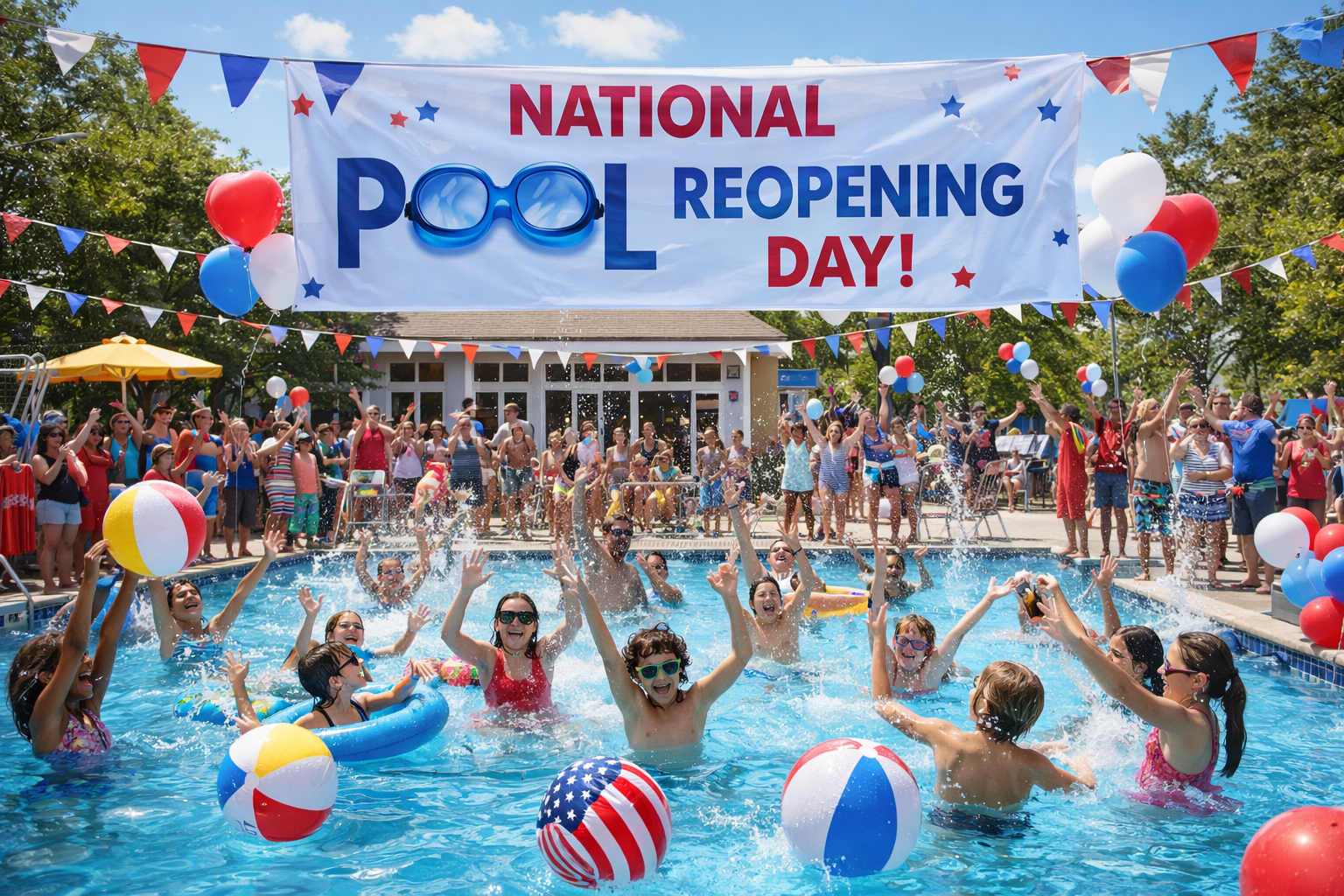
National Pool Opening Day celebrated every year on the last Saturday of April is basically the swim school owner's New Year's Day. It's a fresh start, a packed schedule on the horizon, and the moment your facility goes from quiet and closed to full of splashing, learning, and happy kids. But getting there? That takes serious preparation.
Unlike a backyard pool, your facility isn't just a place to swim it's a licensed, inspected, liability-conscious business. A pH level that's slightly off doesn't just make the water look cloudy; it means pausing lessons, issuing refunds, and fielding worried calls from parents. A missed equipment check in April can snowball into a full system failure in July right in the middle of your busiest session of the year.
That's why we built this checklist specifically for swim school owners and aquatic facility managers. Consider this your go-to opening day playbook so your pool is compliant, your water is safe, your staff is ready, and your students can jump in from day one.
Let's make this your smoothest season yet. 🏊
TL;DR
Reopening a swim school or public pool requires a structured safety, equipment, and marketing plan. Here’s the essential checklist before opening day:
- Inspect the facility and safety equipment – Check deck surfaces, gates, ladders, rescue equipment, and drain covers for compliance and damage.
- Reconnect and test pool systems – Inspect pumps, filters, heaters, valves, and automation systems for leaks or wear.
- Balance water chemistry – Ensure pH (7.2–7.6), chlorine (1–3 ppm), and alkalinity (80–120 ppm) are within safe ranges.
- Deep clean the pool and surrounding area – Skim debris, brush walls, vacuum floors, and clean skimmer baskets.
- Confirm staffing and communication – Verify lifeguard certifications, update schedules, and notify families about reopening details.
- Launch reopening marketing campaigns – Update your Google Business Profile, send reminder emails, and promote enrollment offers.
A successful pool reopening is about safety, compliance, preparation, and clear communication not just filling the water.
Ultimate Pool Checklist for National Pool Reopening Day
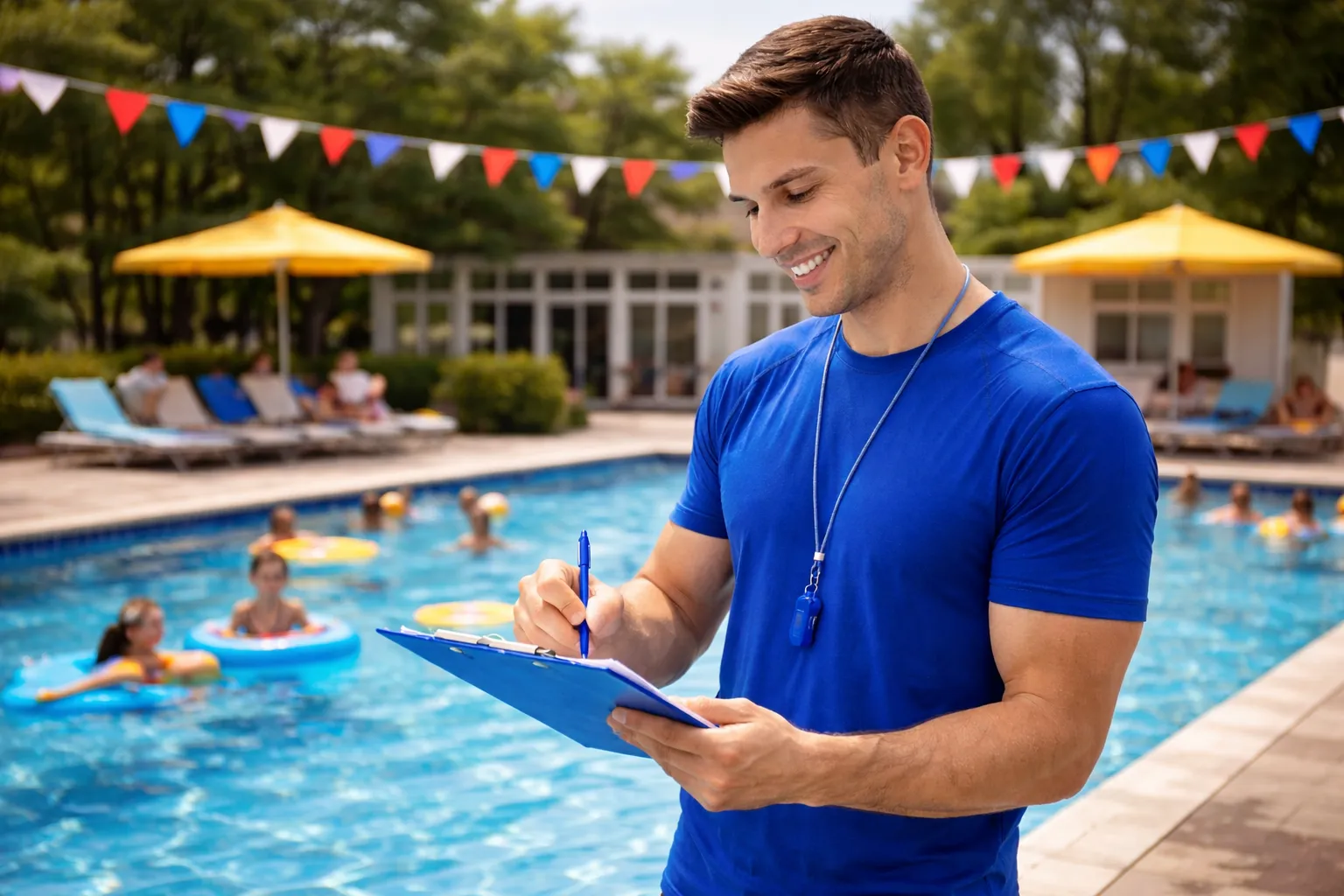
1. Gather Your Pool Opening Supplies First
Before you do anything else, make sure you have everything on hand. Nothing derails a pool opening faster than a mid-project run to the store. Here's what you'll need:
- Pool opening chemical kit (shock, algaecide, clarifier)
- pH increaser and decreaser
- Chlorine tablets or granules
- Pool water test kit or test strips
- Pool brush and vacuum
- Telescopic pole
- Skimmer net
- Replacement gaskets and O-rings
- Filter media (sand, DE, or cartridge)
- Cover pump (if you have a winter cover)
2. Remove and Clean the Winter Pool Cover
Your pool cover has been doing a big job all winter. Before you pull it off, take care to clean and store it properly.
- Use a cover pump to remove standing water from on top of the cover
- Use a leaf blower or broom to clear off debris before removing
- Carefully remove the cover with a helper to avoid dumping debris in the pool
- Lay the cover flat, rinse with a hose, and let it dry completely
- Inspect for tears, holes, or damage
- Fold and store in a dry, cool area (a storage bag or tote works great)
Pro Tip: Never store a wet or dirty cover; mold and mildew can destroy the material over the summer.
3. Inspect the Pool Structure & Surroundings
Before adding water or chemicals, do a full physical inspection of your pool and its surroundings.
Pool Shell & Deck
- Check for cracks, chips, or damage to plaster, vinyl liner, or fiberglass
- Inspect the pool deck for uneven surfaces, cracks, or lifting tiles that could cause injury
- Look for signs of water damage or erosion around the pool perimeter
- Test gates and latches, pool gates should be self-closing and self-latching.
Safety Equipment
- Confirm the life ring/rescue tube is accessible and in good condition
- Check that pool depth markers are clearly visible.
- Inspect pool ladders and handrails, and tighten any loose bolts.
4. Reconnect and Inspect Pool Equipment
Winter storage can take a toll on pool equipment. Before firing everything up, go through this equipment checklist:
Pump & Filter
- Remove all winterizing plugs from the pump, filter, and heater
- Reinstall drain plugs with fresh O-rings or gaskets (use a small amount of Teflon tape)
- Check the pump basket for cracks or damage replace if needed
- Inspect filter media: backwash sand/DE filters, or clean/replace cartridge elements
- Lubricate all O-rings with a Teflon-based lubricant (never petroleum-based)
- Check all valves are in the correct open/closed position
Heater & Additional Equipment
- Inspect the heat exchanger for corrosion or debris (especially if animals nest inside in winter)
- Check pressure gauge, replace if it doesn't read zero when off
- Inspect all return jets and skimmer baskets.
- Check automation systems, timers, and salt chlorinators if applicable.
5. Fill the Pool to the Proper Water Level
If your pool water level dropped over the winter, now is the time to top it off before starting the system.
- Fill pool water to the midpoint of the skimmer opening (typically 1/2 to 2/3 up the skimmer)
- Use a garden hose or municipal water source
- If using well water, note that iron, calcium, or other minerals may require additional balancing
- Avoid filling with water that's extremely cold, it can cause thermal shock to the pool finish
6. Start Up the Pool System
With everything reconnected and the pool filled, it's time to bring your system back to life.
- Turn on the pump and check for leaks at all fittings immediately
- Prime the pump if needed (especially with above-ground pools)
- Run the system for at least 30 minutes before adding chemicals
- Check filter pressure gauge, normal operating pressure is typically 10–25 PSI
- Test GFCI outlets near the pool to ensure they trip and reset properly
- Turn on pool lights and check for proper operation
- Test automated features (water features, auto-cleaners, timers)
7. Test and Balance Your Pool Water Chemistry
This is the most critical step for swimmer safety and pool longevity. Unbalanced water can damage equipment, irritate skin and eyes, and lead to algae or bacterial growth. Here are the ideal chemical ranges you're targeting:
How to balance your pool chemistry:
- Start with alkalinity, adjusting pH is much easier once alkalinity is in range
- Adjust pH next using pH increaser (sodium carbonate) or pH decreaser (muriatic acid)
- Shock the pool with a quality pool shock product (calcium hypochlorite or sodium dichloro)
- Add algaecide as a preventative measure
- Add clarifier if water appears cloudy or murky
- Let the pump run 24 hours before retesting
- Retest and adjust as needed until all levels are in range
Pro Tip: Never add multiple chemicals to the pool at the same time. Always wait at least 15 minutes between additions and with the pump running to avoid dangerous chemical reactions.
8. Clean the Pool Thoroughly
Even if your cover kept out most debris, your pool will need a thorough cleaning before it's swim-ready.
- Skim the surface for any floating debris
- Brush all walls, steps, and the floor with a pool brush work debris toward the main drain
- Vacuum the pool floor (manual or automatic vacuum)
- Clean out all skimmer baskets and pump baskets
- Rinse off the pool deck, pool furniture, and any toys
- If you have a salt cell, inspect and clean it per the manufacturer's instructions.
9. Establish a Regular Maintenance Schedule
Opening your pool is just the beginning. A consistent maintenance schedule keeps your pool safe, clean, and cost-effective all summer long. Create daily, weekly and monthly check logs and conduct seasonal inspections.
Marketing Your Pool Reopening
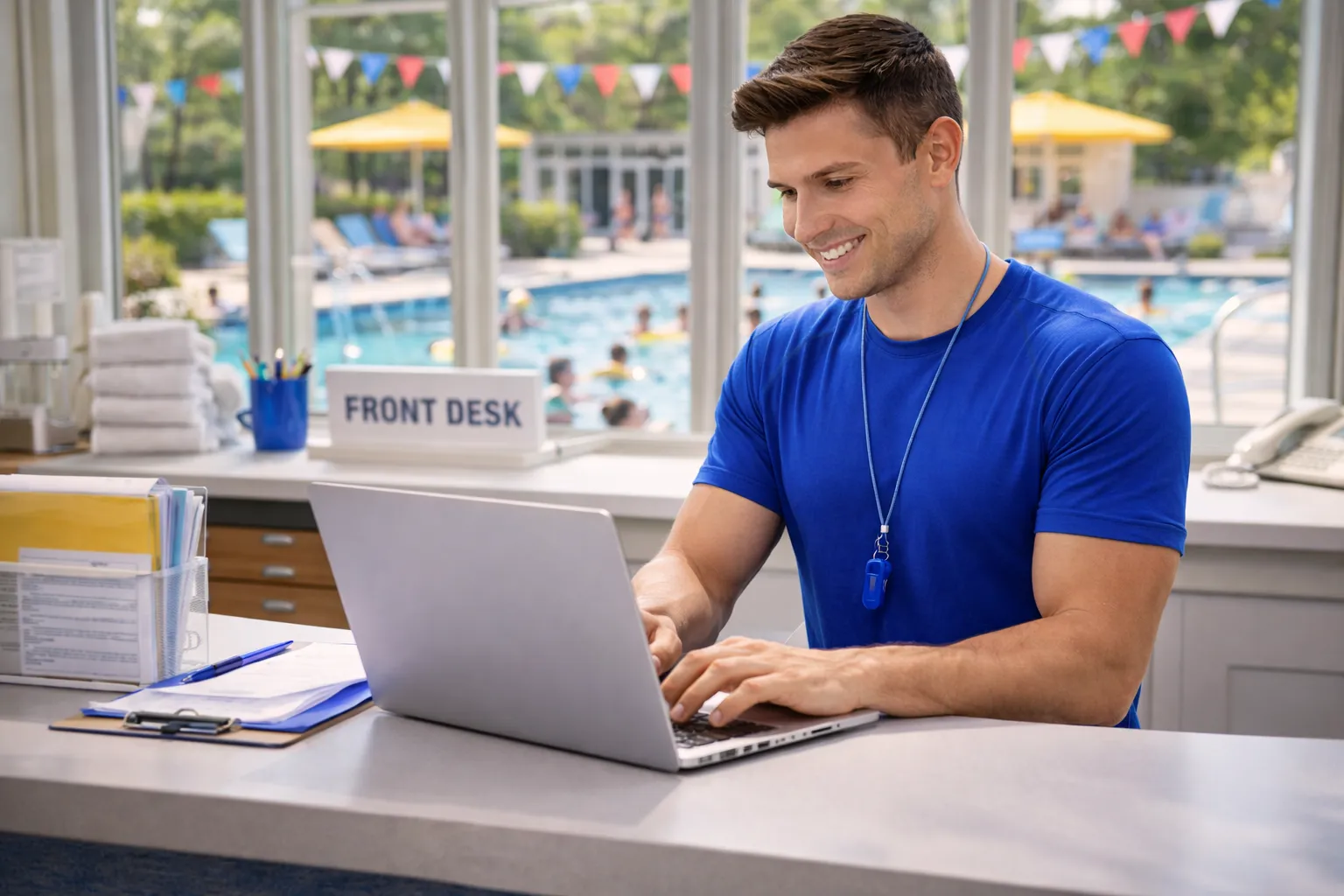
With your pool open and ready, it's time to focus on what drives your business enrollment. Spring is peak swim lesson search season, the window when parent intent is highest and competition for new students is most fierce. An open pool is an asset. A marketed pool opening is a growth strategy.
1. Optimize your Google Business Profile
46% of all Google searches have local intent, meaning families are actively searching for “swim lessons near me.” Make sure your GBP is updated with:
- Current hours and seasonal schedule
- Fresh photos of your facility, instructors, and students (with consent)
- A post announcing your pool opening and enrollment dates
- A direct link to your online registration page.
2. Launch a "Pool Opening Day" Promotion
Pool opening day is a built-in marketing hook. Run a limited-time enrollment offer tied to the date: early bird pricing, a free trial class, or a "first week free" promotion for new families. Create urgency with a countdown and promote it across every channel.
What works?
Email campaigns sent 2–3 weeks before opening day consistently outperform last-minute promotions.
3. Run Targeted Social Media Campaigns Around Water Safety
Parents don't just want swim lessons, they want peace of mind. Lead with the "why" in your social media content, and the enrollments will follow.
Content ideas that work on social:
- "Did you know?" water safety facts leading up to opening day
- Behind-the-scenes pool opening day prep (great for Instagram Reels and TikTok)
- Instructor spotlights and student success stories (with permission)
- Parent testimonials tied to safety and confidence outcomes
- Countdown posts to your first lesson day
4. Build a Referral Program Before the Season Starts
Word-of-mouth is still the most powerful marketing channel for swim schools and a structured referral program turns your happiest existing families into a sales team. Launch or reactivate your referral program in March, well before opening day, so it has time to generate momentum.
A simple structure that works: offer a one-week tuition credit to any current family who refers a new enrollee. It costs you almost nothing when compared to traditional paid advertising, and referred customers typically have higher lifetime value and lower churn.
5. Use Email Marketing to Re-Engage Lapsed Families
Not every family that enrolled last year came back. Before spending money on acquiring new customers, work your existing database. A well-crafted "We miss you" re-engagement email campaign targeting families who didn't re-enrol can be your highest-ROI marketing activity of the spring. More than 55% of U.S. adults have never taken a swim lesson, which means the awareness gap is enormous, and former customers who already believe in swim lessons are far easier to win back than cold prospects.
Segment your list by:
- Families who enrolled last summer but didn't re-enroll this spring
- Families with children who aged into a new skill level
- Adults who inquired but never converted
Personalize each segment with a relevant message and a clear, frictionless call to action like a single-click link to your registration page.
6. Partner With Local Schools, Pediatricians & Community Organizations
Some of your best referral sources aren't online at all. Local elementary schools, pediatric offices, YMCAs, and community centers are all natural partners for swim school outreach. A one-page flyer, a brief presentation at a PTA meeting, or a table at a community health fair can put your school in front of hundreds of families who are actively looking for exactly what you offer.
7. Invest in Paid Search (Google Ads) During Peak Enrollment Windows
Spring is the highest-intent season for swim lesson searches. Families searching "swim lessons for toddlers," "beginner swim classes near me," or "pool safety classes for kids" are ready to enroll, they just need to find you first. A targeted ad campaign running from late March through May, focused on your local area and key enrollment terms, can deliver measurable ROI during the window that matters most.
Start from a modest budget of $10 - $50/day to understand the response and scale steadily.
Final Thoughts
Most pool reopening days don't go wrong because of one big mistake they unravel because of small things overlooked: a skipped equipment check, unbalanced water, or a last-minute scheduling mix-up. A chaotic reopening is preventable.
Check your equipment early, balance your water properly, prep your staff, and communicate clearly with families. Reopening day should feel controlled, confident, and ready not rushed and reactive.
When it comes to managing bookings, attendance, payments, and family communications, Omnify handles the admin so you can focus on what matters. Start your season strong try our 14-day free trial before the first splash.
Get your pool summer-ready with our ultimate pool reopening day checklist. From safety inspections to marketing we cover everything before the first splash.