.webp)
11 Essential Marketing Automation Metrics Every Business Must Track in 2026

Picture this: You’re running a kids’ activity center, and you’re launching a new “Summer Sports” program. The posters are vibrant, the emails are sent right on schedule, and hundreds of parents click the link to learn more. But by the end of the month, only a handful actually sign up for the program.
So, what went wrong?
Was the offer unclear? Too many steps? The wrong audience? Or, the checkout experience?
You can’t find the answer without clear metrics! So, the gap here isn’t your effort before or during your programs; it’s the lack of insights after that. To identify where customers might convert and where they might drop off, you need to understand all the essential metrics.
In this article, we’ll break down 11 key marketing automation metrics you need to track to clearly understand what’s fueling your campaign’s success or holding it back.
Why Metrics Matter for Businesses?

Metrics are more than just numbers. They tell the story of how customers interact with your business. For a service-based business, success depends on the revenue and clients.
Imagine you’re launching a new martial arts program. You promote it across a few channels — Instagram ads, email, local partnerships, maybe a referral push. Once the campaign wraps, the real learning begins.
- Which channels brought in the most registrations?
- How many families repeated the enrollment in sessions?
- Which groups signed up but never attended?
That’s the difference between guessing and growing. By tracking these metrics, you can effectively use the data to grow your business. Without measurement, you cannot predict what needs improvement. According to a guide by Contentsquare, tracking customer retention metrics plays a crucial role in sustaining growth by keeping customers happy.
By now, we’ve covered the importance of marketing metrics. Let’s dive in and explore marketing automation metrics in detail.
11 Key Marketing Automation Metrics
Marketing automation metrics are key performance indicators (KPIs) that measure the effectiveness of automated marketing campaigns by tracking their performance.
With that clarity, you can stop guessing and start optimizing your strategy much better. Here are the 11 metrics you must focus on to analyze your business growth.
- Lead Conversion Rate
- Customer Acquisition Cost (CAC)
- Customer Life-time Value (CLV)
- Email Open Rates
- Click-Through Rate
- Booking/Enrollment Rate
- Customer Retention Rate
- Churn Rate
- Revenue Attribution
- Engagement Score
- Return On Investment of Automation Tools
Let’s have a look at these in detail -
1. Lead Conversion Rate
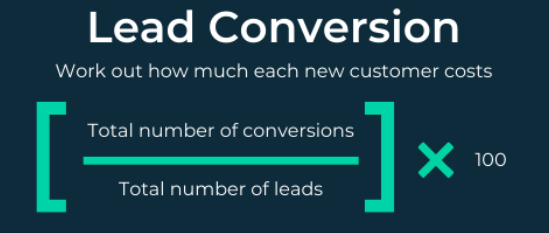
Lead Conversion Rate is the percentage of leads that actually convert into paying customers. If you’re running a service-based business, leads might be sign-ups for a trial class, downloads of a brochure, or inquiries.
Why it Matters: It tells you how well your nurturing, messaging, and funnel are working. If this drops, you need to rework your lead magnet, your follow-up sequence, or your offer itself.
Let’s say you’re sending a welcome email via an automation workflow. Along with the automated emails, you can include an AI voice to remind parents about the trial class. Tools like AI Voice API can help in this case.
If you wonder what difference it’ll bring, it's all about engaging with your customers and resonating with them emotionally. A voice message feels more personal and trustworthy than a static text email. Your clients are more likely to respond, confirm, or even ask questions. Using an AI voice this way creates a more personal, human-like experience for your clients
2. Customer Acquisition Cost (CAC)
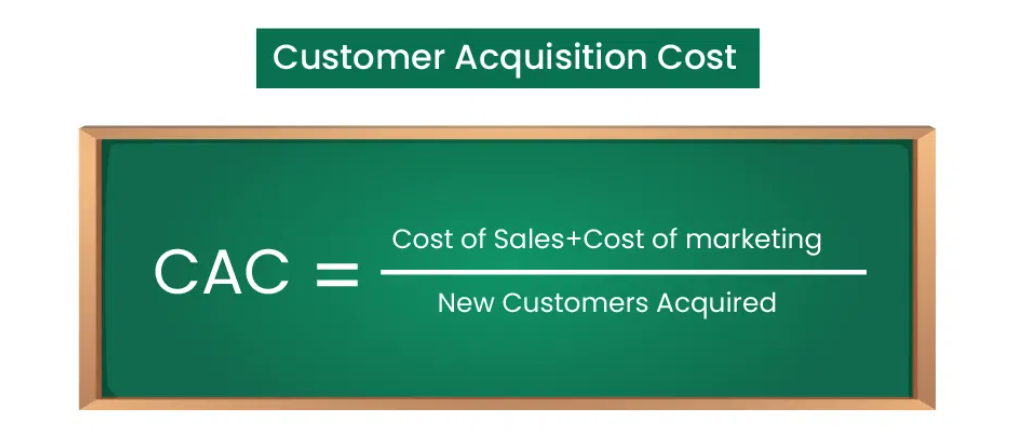
Let's say you’re advertising your yoga studio.
You spent $600 on ads, flyers, referral offers, and so on, and brought in 50 new members. This concludes that the CAC is $12 each. So, the Cost of Acquisition is nothing but the amount you’ve spent to acquire one new client.
Why it Matters: This helps you determine if you’re spending too much to acquire a customer relative to what they are willing to pay.
Smart businesses know that acquisition costs go beyond ads and promotions. Invisible leaks, like payment processing fees, can quietly chip away at the profits. By monitoring unnecessary charges like these, you keep more revenue and achieve a healthier CAC ratio without adjusting your campaign budget.
Read: How you can prevent simple Revenue leaks and make your business profitable.
3. Customer Lifetime Value (CLV)
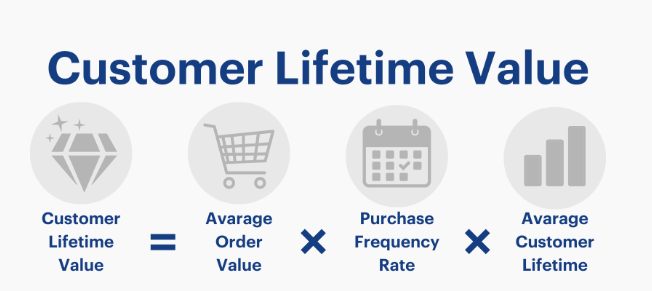
Customer Lifetime Value estimates how much revenue a customer will generate over the course of their relationship with you.
Why it Matters: It shows how much you can afford to spend to acquire customers profitably. When you know CLV, you can set a smart acquisition budget (CAC). If CLV is high, you can spend more to get customers and still win; if it’s low, you need to improve retention or pricing.
For example, if the average member pays $50 per month, stays for 12 months, and occasionally joins a program, their CLV might be around $700.
When you compare Customer Lifetime Value (CLV) with Customer Acquisition Cost (CAC), you get the CLV: CAC ratio. A healthy ratio is around 3:1, meaning for every $1 you spend to acquire a customer, you should earn $3 back over their lifetime. Knowing this metric helps you to address client retention problems early, signaling if a client is leaving faster, not upgrading, and not engaging with your programs. This way, you can understand cheap leads and clients who can bring your business actual profits and plan your marketing strategy accordingly.
4. Email Open Rates
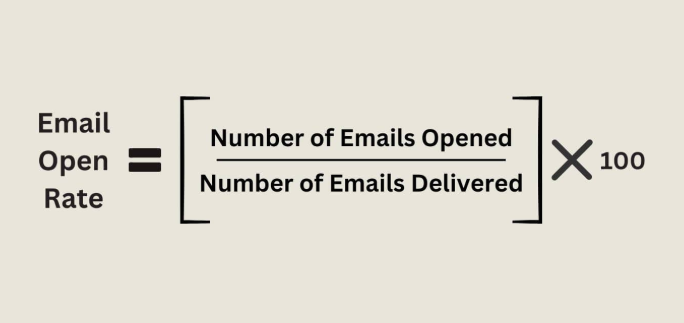
You can’t skip email marketing while running a business! You’re likely to run newsletters ,automated nurture emails , welcome emails, thank you emails, follow-ups, and more.
Email open rate is a simple metric that tells you how many people actually opened those emails. Think of it like this: you can send 1,000 emails, but if only 200 people open them, your open rate is 20%.
Why it matters: If your open rate is low, your subject lines or email copy aren’t compelling enough, or your email list needs cleanup, because disengaged subscribers will start ignoring you over time. Using email list cleaning tools can help remove invalid addresses and reduce unnecessary bounces.
That’s exactly why open rate matters. It shows you what actually grabs your clients’ attention. Once you spot what works, you can lean into it for future emails and build a stronger, more effective marketing strategy over time without guessing. If you're still deciding which platform fits your workflow, resources like Email Software Insights break down features and pricing across popular email tools to help you choose.
5. Click-Through Rate (CTR)

Click-Through Rate (CTR) measures the percentage of people who click a link after opening your email or ads.
Why it Matters: A high click-through rate indicates that users find your content, ads, or listings relevant and compelling. CTR affects ad performance; platforms tend to push ads with strong CTR more.
For example, a fitness training academy noticed that its “New Fitness Program” email had a low click-through rate (CTR) of 0.8%. To improve engagement, they redesigned the email with a tweak in the call-to-action button that said, “Reserve your seat now.” The CTR rose to 3.5%, leading to a measurable increase in bookings through their automated tracking system.
This shows how analyzing CTR helps you identify weak points in your campaign and make small adjustments that lead to great results.
6. Booking/Enrollment Rate
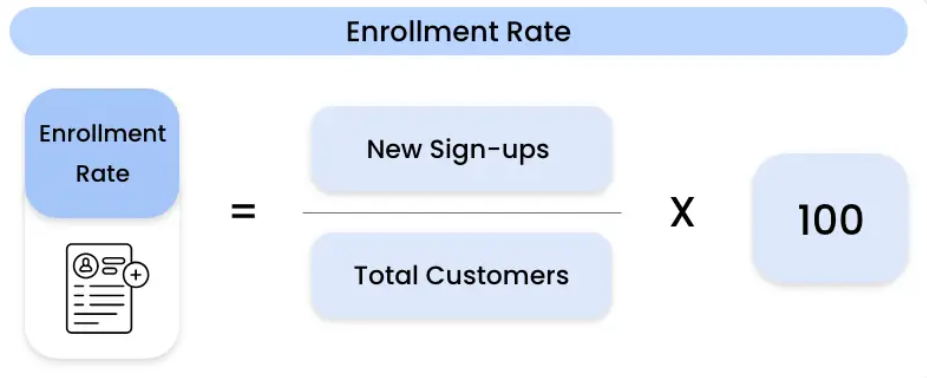
Now, let's move on to the most important part of the funnel - Conversions! It measures the percentage of leads or link clickers who take the next step and complete a booking or enrollment.
Why it matters: This metric reveals how effective your marketing funnel truly is. It shows whether your campaigns are persuasive enough to turn interest into action and helps you identify any bottlenecks where potential customers drop off.
This tells you if your funnel is doing its job. If lots of parents click but only a few enroll, something in the booking journey may be slowing them down, such as pricing clarity, form length, trust signals, or checkout friction. Fixing those bottlenecks can lift enrollments without spending more on ads.
7. Customer Retention Rate
Retention rate is the percentage of customers who like your service and continue to use it over a period of time.
Why it Matters: For service-based businesses like studios and centers, tracking retention rate is crucial because long-term customers bring consistent revenue and become strong advocates for your brand. Retaining existing clients costs far less than acquiring new ones, and loyal members tend to spend more over time through renewals, upgrades, or referrals. That’s why monitoring this metric regularly helps you understand how well your business maintains relationships and where you may need to strengthen customer engagement.
8. Churn Rate
Churn rate shows how quickly customers are leaving your service, subscription, or program. It is the annual percentage rate at which customers stop subscribing to a service or employees leave a job.

Why it Matters: High churn indicates issues like high or unpredictable pricing, service quality, competition, or negative member experience. A high churn rate reflects the overall strength of customer loyalty. Tracking churn helps you identify weak points in the customer journey. Over time, analyzing churn trends can help predict Customer Lifetime Value (CLV) and guide retention strategies that improve satisfaction and long-term profitability.
9. Revenue Attribution
When you run multiple promos, social ads, and referral programmes, you need to attribute which efforts produced conversions. Whether it’s the campaign or the channel of the workflow! Tying revenue to the right source is very important to understand what’s fueling growth and where to invest next.
Why it matters:Revenue attribution is essential because it shows you exactly which marketing channels and campaigns are driving actual sales. Without it, you risk wasting budget on tactics that don't convert while overlooking the ones that truly deliver results. A marketing attribution platform can connect Instagram ads, emails, and referral links to the bookings they actually drive, without any complex data setup. For marketing data specifically, tools like Supermetrics pull campaign numbers straight into a sheet, which is usually enough at studio scale without standing up a warehouse. Understanding attribution helps you make smarter investment decisions, optimize marketing spend, and focus on strategies that bring measurable returns.
To have a better understanding, you can waive the help of technology, such as ELT tools can then help bring all your campaign, CRM, and booking data together into one place so you can clearly see which efforts are contributing most to your revenue growth.
10. Engagement Score
An engagement score is a custom metric you build by combining factors like email opens, website visits, class attendance, referrals, and social interactions.
Why it matters: This goes beyond simple numbers into predictive analytics like who is likely to stay, who is about to churn, and who could become your brand advocate. For businesses looking to take this further, agentic AI development services represent the next evolution of engagement scoring — where AI systems don't just flag at-risk customers but autonomously trigger contextual responses based on real-time behavior patterns, removing the need for manual intervention at every step
For example, a coworking space equipped with a coworking software creates an engagement scoring model: +2 points when a member books a meeting room +1 point for attending community events, and -4 points if they haven’t visited the space for 10 days. When a member’s score starts to drop, the system automatically sends a personalized check-in message or a “Work From Here Wednesday” perk to encourage return. Over time, this helps reduce churn and strengthen member loyalty. A visitor management app can also help track who is coming into the space and make the overall member and guest experience more seamless.
11. Return On Investment of Automation Tools
What is Return on Investment (ROI)?

Return on investment is a performance measure used to evaluate the profitability of an investment by comparing the gain or loss generated to the cost of the investment. It is a key metric for assessing an investment’s efficiency.
Why it Matters: It’s important to know whether the automation saved staff time, drove extra bookings, or reduced churn.
Measuring automation ROI extends to every aspect of business costs, not just email tools.
Conclusion
Metrics help you see the real growth pattern of your business. When you track essentials like conversion, retention, and engagement, you know exactly what’s working, what’s slipping, and where to focus next. Pair those insights with the right automation tool, and raw data turns into clear, repeatable growth.
And if you want to make running your business easier, you can try investing in an all-in-one management platform like Omnify. It streamlines everything from bookings and payments to attendance and customer insights, so you spend less time on admin and more time building great programs.
Try Omnify free trial for 14 days and see the difference for yourself.

Discover the 11 most important marketing automation metrics businesses must track to boost campaign performance, improve ROI, and drive success in 2026.