.webp)
Common Challenges Soccer Academies Face And How to Solve Them

According to recent reports, the global sports coaching market is expected to expand from USD 8.89 billion in 2026 to USD 13.47 billion by 2031. That's a significant jump in just five years, reflecting strong demand for professional training and structured sports development.
This translates to more players, more programs, and more competition. As the industry grows, so does the behind-the-scenes chaos. You start with 30 kids and a clipboard. Then it becomes: 200+ players across multiple age groups; Trial sessions every week; Parents asking about pricing tiers; Coaches needing updated rosters; membership renewals due on different dates; And your inbox? Flooded.
Somewhere between managing late payments, tracking attendance on WhatsApp, Messenger or telegram and manually replying to every "Do you offer trials?" email, you realize something: You're spending more time managing operations than developing players.
That's the real challenge most soccer academies face today. Not coaching. Not talent. But systems. In this blog, we'll break down the most common challenges soccer academies face and how modern academies are solving them efficiently!
Challenges Soccer Academies Face
Today, soccer academies face several common operational challenges as they grow and scale. The good news? With the right systems and a few careful steps, each of them can be solved efficiently.
- Offering Trial Sessions
- Roster Management
- Auto Payments & Renewal Gaps
- Managing Different Programs & Age Groups
- Membership Management
- Communication Breakdowns
- Lead Management and Conversion Gaps
- Lack of Reports and Insights
Let's take a closer look at each of these challenges: what causes them, how they impact your academy, and what you can do to fix them before they slow down your growth.
1. Offering Trial Sessions

Trial sessions are often the moment that decides everything, even when parents are already interested. A child might be excited after seeing your Instagram. A parent might have heard great things from another family. But before committing to monthly fees and weekend schedules, they want to "see how it goes."
The challenge isn't offering trials. It's offering them in a way that doesn't create confusion behind the scenes.
What's Really at Stake?
Trial sessions are more than just a free practice. They're first impressions. A parent shows up hoping their child feels welcomed. The child walks onto the field, slightly nervous. If the coach doesn't know they're coming, if paperwork isn't sorted, or if no one follows up afterward, that opportunity quietly slips away. What clients need isn't just a good training session; it's a smooth, organized experience from start to finish!
What do your Clients Expect?
- How easy it was to book the trial.
- Whether they received confirmation and clear instructions.
- If the coach is friendly and knowledgeable.
- Whether someone followed up after the session.
- How simple it is to move from trial to enrollment.
What To Do?
Turn trials into a structured gateway, not an informal add-on.
- Clearly define whether trials are free or paid.
- Set capacity limits so sessions don't get overcrowded.
- Offer an easy online booking flow.
- Automate confirmations and reminders.
- Collect waivers before arrival.
- Track attendance.
- Follow up within 24–48 hours with the next steps.
💡How Omnify Helps?
Omnify allows you to create structured trial sessions directly from the dashboard. You can set up free or paid trials, limit available slots, and allow parents to book online without back-and-forth messages.
Related Read: How to Start a Youth Soccer Academy: A Complete Business Guide
2. Roster Management
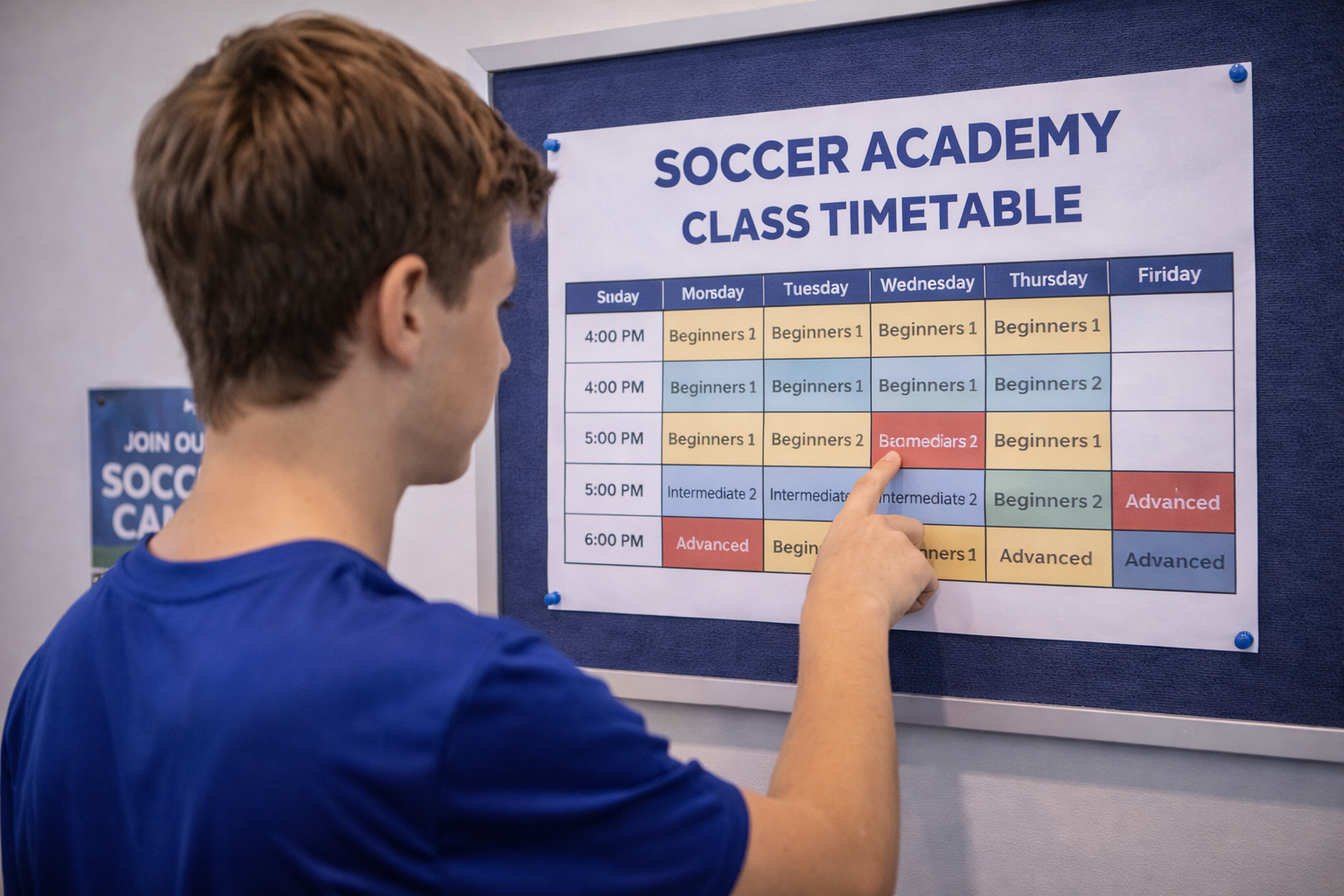
Attendance issues are silent revenue leaks that are overlooked until they start affecting retention. You might assume everything is running smoothly because sessions are happening. But if you don't have clear visibility into who's showing up consistently and who's slowly dropping off, you're missing critical signals. So make sure you track them in a structured and useful way.
What's Really at Stake?
As your academy grows, keeping track of players becomes harder. When a child starts missing sessions regularly, that's often the first sign they're disengaging. Without attendance tracking, you only realize it when they stop coming entirely. What clients need isn't just a spot on the field — they need structure and accountability.
What To Do?
Move from informal roll calls to structured attendance and roster systems.
- Maintain real-time rosters for every batch
- Set clear capacity limits per session
- Track attendance consistently
- Do a predictive analysis based on the absence pattern.
- Monitor active vs inactive members
- Ensure coaches always have updated participant lists
💡How Omnify Helps?
Omnify provides real-time roster management and attendance tracking directly within the dashboard. Attendance can be marked digitally, giving you visibility into player consistency and engagement trends. Instead of guessing who belongs where, you operate with clarity and control — improving organization, retention, and overall training quality.
3. Auto Payments & Renewal Gaps
Late payments are often the awkward deal-breaker — even when parents genuinely want their child to continue. Families don't delay payments intentionally. Life gets busy. Reminders get buried in inboxes. Deadlines slip.
What's Really at Stake?
When renewals aren't structured, revenue becomes unpredictable. You spend time sending reminders instead of planning training.
Coaches ask, "Is this player paid for this month?" Admins chase screenshots of transfers. Parents feel uncomfortable getting multiple payment nudges. A child might miss training simply because a payment reminder was delayed or overlooked.
When payments are inconsistent or unclear, it creates friction and even drop-offs.
What To Do?
Move from manual collection to predictable recurring billing.
- Offer recurring membership plans (monthly, quarterly, yearly).
- Provide auto-pay options.
- Send automated renewal reminders before due dates.
- Clearly communicate billing cycles
- Provide easy upgrade or plan change options.
- Track failed payments instantly.
💡How Omnify Helps?
Omnify enables setting up automated payments and renewal reminders. Clients can securely store payment methods and subscribe once, eliminating the need for monthly follow-ups. The system automatically processes renewals, notifies families before charges, and alerts you if a payment fails.
4. Managing Different Programs & Age Groups

Running one soccer program is manageable. Running ten different programs at the same time? Most academies don't just have "soccer training." You're juggling:
- U6, U8, U10, U12, U14 squads
- Weekend-only batches
- Elite or invite-only training groups
- Holiday camps
What's Really at Stake?As your academy grows, complexity grows with it. Without a structured system, you start hearing things like: "I thought he was in the Tuesday batch?" "Wasn't she moved to advanced training?" "How many players are in the U10 session today?" "Coach, we have too many kids on this field."
Overbooking sessions. Underutilized batches. Coaches are unsure who belongs where. Parents are confused about schedules. And when sessions feel crowded or disorganized, it directly impacts the training experience.
What do your Clients Expect?
- Whether they are placed in the correct age or skill group.
- Whether schedules are clear and consistent.
- If coaches know who's enrolled.
- How easy it is to switch or pause sessions or upgrade programs
- How transparent is the progress?
What To Do?
Move from informal tracking to structured program management.
- Create clearly defined programs by age and skill level.
- Set capacity limits to prevent overcrowding.
- Assign coaches to specific batches.
- Maintain real-time rosters.
- Provide makeup credits, the ability to switch, and pause.
- Allow easy movement between groups when players advance.
- Keep attendance organized and visible.
Make sure your academy stands out from your competitors by being organized, visible, and scalable with better program management.
Also Read - Pause, Switch, Adjust: How Programs Should Adapt to Busy Family Schedules.
5. Membership Management

Membership confusion is often the slow-burning problem, even when enrolments are strong. You might have plenty of players signed up, but managing who's on which plan, when renewals are due, and what each member is entitled to can quickly get overwhelming.
What's Really at Stake?
As your academy expands, memberships become layered, such as: Monthly training plans, Quarterly performance programs, Elite squads, Weekend-only batches, etc.
Without structure, you start hearing: "I thought we paid for three sessions per week?" "Is our membership still active?" "Can we switch to the advanced batch?" "When does our plan renew?" Admin teams dig through spreadsheets. Coaches ask who's active. Parents feel uncertain about what they signed up for.
What To Do?
Create structured membership systems that scale with your academy.
- Clearly define membership tiers, pricing, and benefits.
- Standardize billing cycles.
- Automate renewals and reminders.
- Allow easy plan upgrades or downgrades.
- Maintain real-time visibility of active vs inactive members.
- Keep membership records centralized.
Membership management should be transparent, automated, and easy to adjust as players grow.
💡How Omnify Helps?
Omnify enables academies to create flexible membership plans directly within the platform — monthly, quarterly, yearly, or custom durations. Offer tiered pricing, trials, auto-renewal options, pause options, and more.
6. Communication Breakdowns

You might be running great sessions, improving player skills, and building strong teams. But if families feel out of the loop, small issues quickly turn into bigger frustrations. If your communication game is inconsistent and scattered, then that'll be a problem.
What's Really at Stake?
Between weather changes, tournament reminders, membership renewals, and schedule updates, there's always something to announce. Here, your team shouldn't be answering the same questions repeatedly instead of focusing on coaching.
Imagine this: A parent books a trial but never receives confirmation. They're unsure if it's actually scheduled. Or a renewal is due, but they only realize it after access is paused. Situations like this will drop your trust score.
What To Do?
Move from manual messaging to automated communication systems.
- Send automatic booking confirmations.
- Trigger reminders before sessions or events.
- Automate renewal and payment alerts.
- Use SMS for urgent updates (like weather cancellations).
- Segment communication by batch or program.
- Reduce dependency on group chats.
If an academy wants to move beyond group chats and handle conversations within its own app, a real-time messaging API can support one-to-one and group messaging, message delivery, push notifications, and media sharing. Communication shouldn't depend on who remembers to send a message. It should run automatically in the background.
💡How Omnify Helps?
Omnify helps you send automated email and SMS communication directly. Session reminders can be sent automatically before training to reduce no-shows. Renewal and payment alerts keep families informed without manual follow-ups.
7. Lead Management and Conversion Gaps

Missed follow-ups are often the silent deal-breaker, even when parents genuinely want to enrol. Many families reach out to multiple academies at once, and the one that responds clearly and professionally usually wins. The challenge isn't a lack of interest; it's the lack of a structured system to track and nurture that interest.
What's Really at Stake?
Trial sign-ups, Event RSVPs, and booking inquiries all generate potential long-term members. But without structure and organization, those opportunities fade. What clients need isn't just training quality, it's the overall experience.
What do your Clients Expect?
- How quickly and clearly the academy responds.
- Whether the enrolment process feels professional.
- If booking a trial is simple.
- Whether communication feels organized and supportive.
When follow-ups are delayed or inconsistent, it signals disorganization — and trust drops.
What To Do?
Build a structured lead pipeline instead of reacting to scattered messages.
- Track every lead in one centralized system.
- Categorize prospects based on their status with your business.
- Capture leads from events, referrals, RSVPs, and inquiries.
- Follow up consistently.
- Measure conversion rates.
Lead management shouldn't rely on memory or sticky notes. It should be visible, trackable, and intentional.
💡How Omnify Helps?
Omnify provides a built-in lead management system directly within the dashboard. Businesses can add leads from party RSVPs camps, parties, or other bookings and manage them easily, turning scattered interest into measurable growth.
8.Lack of Reports and Insights

Data is often the most underused asset in any growing business. Sessions are running. Players are enrolling. Payments are coming in. But without clear reports and insights, you're operating on instinct instead of information.
What's Really at Stake?
As your academy grows, decisions become more complex.
You start asking:
- Which programs are generating the most revenue?
- Which age group has the highest drop-off rate?
- How many trial players actually convert into members?
- Which month sees the most cancellations?
- Are renewals increasing or declining?
When you don't track these trends, you can't improve them. You may not notice declining enrollments in a specific batch until it's too late. You may not realize trials are converting at only 30%. You may not see that a particular membership tier isn't performing. Your business stability comes from informed decisions.
Imagine this: You decide to cancel a batch due to "low interest," but you never tracked trial-to-conversion data. The issue wasn't demand. So that's not a market problem. This is why it's important to track this data.
What To Do?
Move from guesswork to data-driven decision making.
- Track enrollments by program and age group.
- Monitor revenue trends monthly.
- Measure trial-to-membership conversion rates.
- Analyze attendance consistency.
- Identify peak and slow seasons.
- Review membership churn rates.
Reports shouldn't just exist for accounting. They should guide strategy. Your academy shouldn't rely on "I think this batch is doing well." It should rely on clear numbers.
💡How Omnify Helps?
Omnify provides built-in reporting and business insights You can track revenue, active memberships, attendance trends, and conversion performance in real time. Instead of manually compiling spreadsheets, you get clear visibility into what's working and what needs attention. Omnify turns your operational data into actionable insights — helping you grow your academy with confidence, not guesswork.
Read in detail - FAQs on Travel Soccer and Club Soccer: What Every Youth Soccer Club Owner Should Know
Conclusion
Running a soccer academy today isn't just about developing great players; it's about running a smooth operation behind the scenes. You can have the best coaches. The best drills. The best intentions.
But if leads aren't tracked, trials aren't structured, memberships aren't organized, payments aren't automated, communication is scattered, and attendance isn't monitored — growth starts to feel overwhelming instead of exciting.
When operations run smoothly, everything else improves. Coaches focus on coaching. Parents feel confident. Players stay longer. Revenue becomes predictable. That's where tools like Omnify come in. Not as "just software," but as the operational backbone that helps soccer academies move from reactive to organized, from scattered to scalable.
Because at the end of the day, you didn't start your academy to chase payments or manage spreadsheets. You started it to build better players. And with the right systems in place, you actually can. ⚽.
Try our 14-day free trial!
Struggling with lead tracking, trials, renewals, or roster management? Learn how soccer academies can streamline operations and scale smarter.