.webp)
How Parents Choose Kids’ Activity Centres: Top 10 Factors

Demand for organized kids and youth activities is strong, but families are under pressure. Youth sports participation has rebounded post‑pandemic (55.4% of youth ages 6‑17 played sports in 2023, per the National Survey of Children’s Health as cited by Aspen Institute Project Play), while the cost of youth sports is reported to be up 46% since 2019.
Parents don’t “shop” for kids’ activities the way they shop for adult fitness or hobbies — they’re balancing safety, logistics, cost, and their child’s happiness at the same time. The centres that win are the ones that make trust obvious and commitment easy: clear info, flexible scheduling, simple payments, and reliable communication.
If you run a kids’ activity center, sports program, or community class, understanding how parents make these decisions helps you shape your offerings, your messaging, and your enrollment experience.
The top 10 factors parents use to choose
Before enrolling their child, most parents run through a mental checklist to make sure they’re choosing the right academy. Top 10 of those include -
- Safety and Safeguarding
- Cost and Affordability
- Schedule fit and Convenience
- Flexibility when Life Happens
- Coach Quality and Program Culture
- Clear Class Fit by Age and Level
- Reputation, Reviews and Social Proof
- Low‑risk Entry via Trials and Intros
- Communication that Feels Reliable
- Class Management Experience
Based on industry patterns, customer feedback, and real operational insights, let’s deep dive into the top 10 factors that parents consider when choosing an activity center — and how you can optimize for each.
1. Safety and Safeguarding

Parents start with one question: “Will my child be safe here — physically and emotionally?” In a national Aspen Institute survey of 1,848 youth sports parents, 87.9% said coaches should be required to pass a criminal background check before they’re allowed to coach.
Alongwith that, parents look for facilities that are clean, well-maintained, and equipped with age-appropriate gear. Licensed staff with valid background checks and clear safety protocols help families feel secure.
What To Do?
Make safeguarding visible: publish your background check policy (and renewal cadence), staff-to-child ratios, drop‑off/pick‑up process, and behaviour expectations. Provide clear escalation paths for parents.
2. Cost and Affordability
Cost is often the deal-breaker, even when parents want to enrol. Afterschool Alliance found 57% of parents cited programmes being too expensive as an important factor in deciding not to enrol. In youth sports, a 2024 Harris Poll study commissioned by Good Sports found 56% of parents worry they won’t be able to put their child in a sport next year due to rising costs, and 75% have strongly considered pulling their child out.
What do parents weigh?
- What they’re paying
- What their child receives (skill growth, joy, safety)
- Flexibility and support
What To Do?
Be radically transparent: list total costs (fees + uniform/equipment expectations + competition/travel expectations if applicable). Offer tiered options (recreational vs competitive), sibling pricing, and payment plans.
3. Schedule fit and Convenience
Parents don’t just choose the “best” programme. They choose the one they can consistently get to. Afterschool Alliance reports that beyond cost, key barriers include lack of safe transport (52%), inconvenient locations (51%), and hours not meeting parent needs (49%).

Youth sports parents also report a significant time burden: on a sports day, families spend an average of 202.74 minutes across driving, attending, communication, and logistics — “more than three hours per day,” per the Aspen survey.
What To Do?
Offer more than one “prime time” slot when possible; add clear parking/drop‑off notes on your booking page; and set expectations for punctuality and transitions (especially for younger age groups).
💡How Omnify helps?
Using central real‑time calendar for classes, programmes, camps, and appointments helps your team manage daily schedules and adjustments without spreadsheet chaos.
4. Flexibility when Life Happens
This is where retention is won or lost: missed classes will happen! Families want a policy that feels fair, not punishing. This is especially true in “high-commitment” activities where schedules affect family routines.
What To Do?
Put flexibility in writing: make‑ups, credits, pause rules, and switching sessions should be simple enough to explain in two sentences. Aim for policies that protect revenue and reduce parent anxiety.
💡 How Omnify helps?
Omnify lets you easily pause billing, switch sessions or programs, convert trials, and offer make-up credits—all without disrupting subscriptions.
For more details, READ: How Programs Should Adapt to Busy Family Schedules.
5. Coach Quality and Program Culture

Parents aren’t just evaluating credentials — they’re evaluating the kind of experience their child will have. For younger children, especially, coach behavior, patience, communication style, and emotional safety matter as much as technical skill. Programs that offer age-appropriate pathways, varied formats, and development-focused coaching tend to build confidence and long-term interest.
In Aspen’s parent survey, the two most desired coach trainings were injury prevention and CPR/first aid. The American Academy of Pediatrics also notes that when children have fun, they’re more likely to stay involved — and coaches who prioritize development and enjoyment see stronger retention.
Trust, however, can be fragile: 20.5% of parents in the Aspen survey said their child experienced inappropriate pressure or exploitation by coaches or other adults supporting the team, club, or school.
What To Do?
Invest in coaching standards: onboarding, continuing education, and a clear philosophy (fun, belonging, progress). Share coach bios, certifications, and your code of conduct publicly. You may share instructor bios, certifications, and photos to build familiarity before the first class or directly on your website.
6. Clear Class Fit by Age and Level

Parents want to confidently answer: “Is this right for my child’s age, ability, and temperament?” Confusion here drives refunds and drop‑offs — even if your coaching is excellent.
What To Do?
Give every session a clear “who it’s for” and “what they’ll learn”. Add photos/videos that show the real environment, not stock images. Offer beginner pathways and “move‑up” criteria.
Put clear descriptions-
- Use clear class titles and details (age, skill level, outcomes).
- Include goals like “build confidence”, “develop coordination”, or “social skills through teamwork”.
- Make it easy to compare class options.
💡How Omnify Helps? Age restriction controls help ensure the right age groups book the right services, improving the experience for families and reducing awkward front desk conversations.
7. Reputation, Reviews, and Social Proof

Parents don’t want to experiment with their child’s time and safety; they look for social proof. BrightLocal’s 2026 Local Consumer Review Survey (US adults) reports 97% of consumers read reviews online, and 41% “always” read reviews when browsing for businesses.
What do parents check?
- Google reviews
- Social media testimonials
- Word-of-mouth recommendations
- Photos of classes in action
What To Do?
Treat reviews like an operational KPI: ask consistently, respond quickly, and make it easy to find recent feedback (Google Business Profile, Facebook, parent communities).
8. Low‑risk entry via Trials and Intros
For kids’ programs, committing upfront can feel like a big step. Trial classes and intro sessions lower the barrier to entry by giving families a risk-free way to see if their child enjoys the activity, connects with the coach, and feels comfortable at the right level. This “try before you commit” approach builds confidence and increases enrollments.
For kids’ programmes, trials remove uncertainty: “Will my child like it?” and “Is this the right level?”
What To Do?
Offer a structured intro: a trial class, a short starter pack, or a two‑week beginner block — and follow it with a clear next step (“enrol in the term”, “move into Level 1”).
9. Communication that Feels Reliable
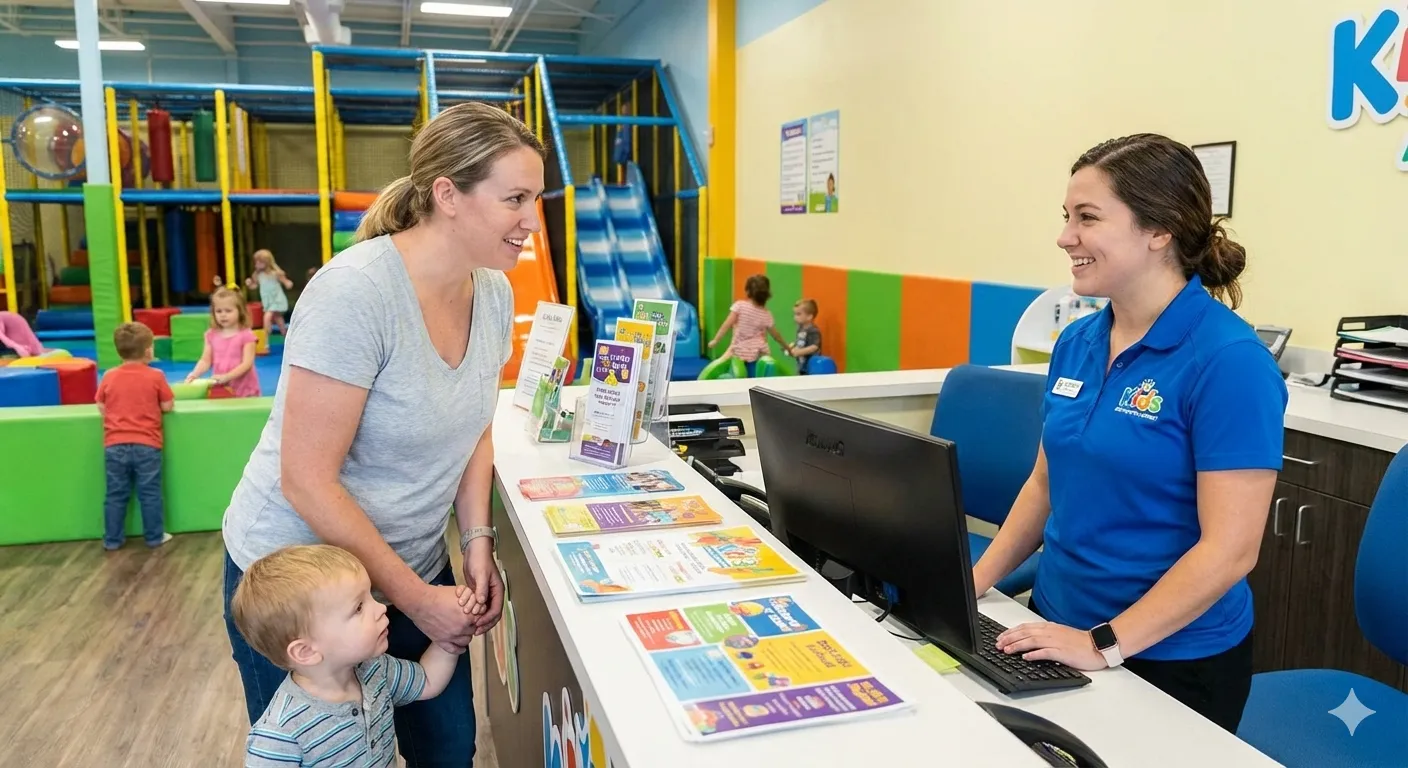
For parents, reliability isn’t optional — it’s essential. Clear reminders, timely updates about schedule changes or closures, and prompt payment confirmations signal that a program is organized and dependable. In after-school settings, where logistics like hours and availability are already tight, poor communication amplifies stress. Consistent, proactive communication reassures families and strengthens trust.
What To Do?
Automate the basics (confirmation, reminder, cancellation/update notices). Then add the human layer where it matters (a thoughtful reply to a worried parent). A few things you can focus on are-
- Automated SMS/email reminders
- Clear refund and cancellation policy
- Quick support channels
💡Omnify’s Auto Emails are built to automatically send confirmations, reminders, and updates, reducing manual chasing.
10. Class Management Experience
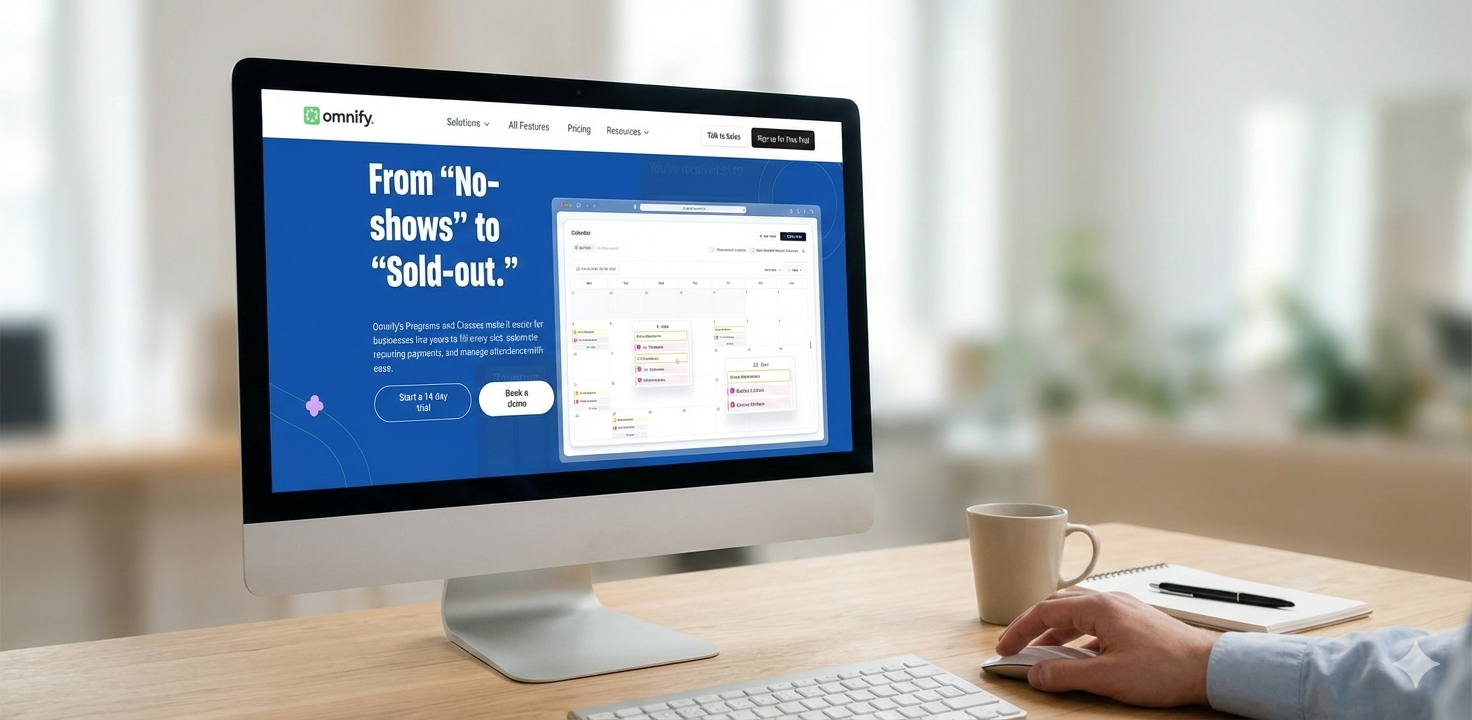
Parents don’t want to fight for a spot every season — and they also want to feel their child is progressing. The ease of booking, payments, schedule changes, and record-keeping plays a major role in a parent’s decision. Busy families expect fast, intuitive systems — not clunky portals, manual forms, or back-and-forth emails that waste time.
What to do?
Invest in a seamless class management platform that makes enrollment, communication, waitlists, and payments effortless for parents.
🚀 How Omnify Helps? With Omnify, you can enable online sign-ups and secure payments, offer flexible pause/switch/make-up options, offer trials, and automate reminders and billing. Plus ability to track attendance and class history in one place creates a seamless experience that drives repeat enrollments and referrals.
Final Thoughts
Parents don’t make decisions based on one factor — they weigh safety, fun, value, convenience, and flexibility together. The programs that grow are those that not only deliver great classes but also deliver a seamless, empathetic experience from discovery to ongoing participation.
For owners and managers, this all adds up to a simple reality: parents are choosing providers that reduce friction. That includes the “front‑of‑house” (reputation, class fit, staff quality) and the “back‑of‑house” (flex policies, payment options, reminders, attendance tracking).
By optimizing around these top 10 factors and using tools that support flexibility, communication, and ease of use; you stand out to busy families and build long-term loyalty.
In the age of choice, great experiences beat good ones every time.
With Omnify, you have everything you need to deliver that experience — from flexible scheduling and secure payments to automated communication and real-time insights — so you can focus less on admin and more on creating programs families love.
Discover what parents look for in kids’ activity centers- from safety and flexibility to programs & communication, & how to boost enrollments and retention.