.webp)
How to Sell Digital Products Alongside Your Programs and Memberships
What if every class booking, camp registration, or membership signup could do a little more for your business?
Selling digital products alongside your programs is one of the easiest ways to increase revenue and deliver more value to your customers. From at-home activity packs to onboarding guides and practice videos, these digital add-ons help families get more out of your services—while quietly creating an additional income stream for you.
It also works as an effective upselling strategy — studies by Forrester and Gartner show that personalized product recommendations can increase revenue by up to 300% and boost conversion rates by 150%, highlighting the strong impact of relevant add-ons at checkout.
No matter what kind of program you run—kids’ activities, swim lessons, yoga, or fitness—this guide shows you what digital products are, why they’re so effective, and how to start offering them alongside your services with ease. Let’s get started.
What are “digital products”?
Digital products are intangible goods delivered electronically – think of things like e-books, videos, PDFs, or online courses. They don’t require shipping or physical inventory and can be sold repeatedly at virtually no extra cost.
In other words, you can create a digital resource once and sell it forever.
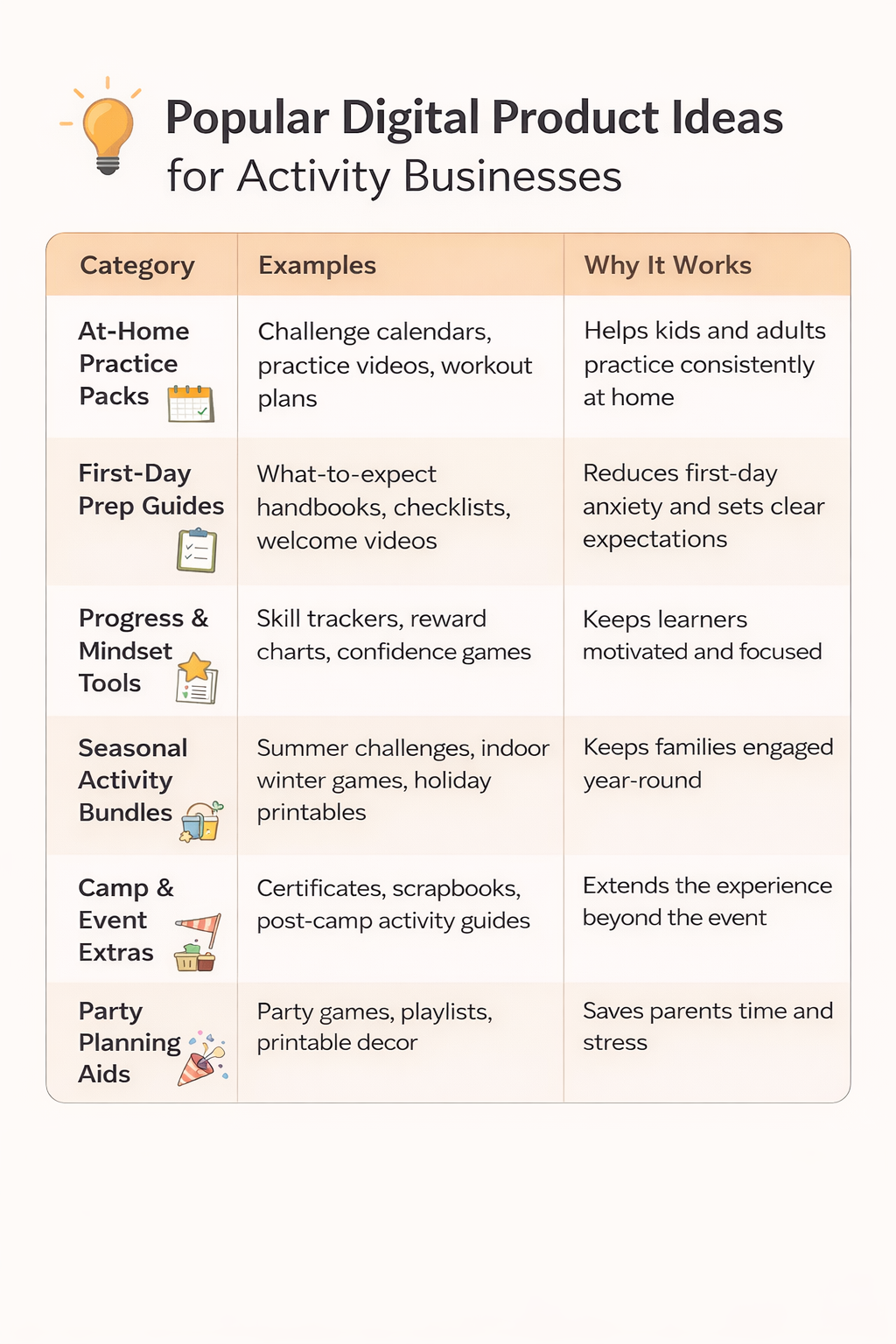
For a kids' activity business, a digital product could be a recorded class video or a kids’ activity workbook. For a fitness business, it could be a workout plan PDF, a how-to guide, or even a set of printable templates for maintaining a diet. If it’s a file or online content that provides value, you can package and sell it.
Today’s customers love businesses that think ahead. When you offer digital products alongside your services, you’re not just selling more—you’re creating a better experience. Porch Group Media reports that 56% of online shoppers are more likely to return to a site that recommends relevant products, making digital add-ons a powerful way to boost loyalty and revenue at the same time.
Why sell digital products with your programs?
For service-based businesses like children’s activity centers, fitness clubs, swim schools, and similar, digital products can complement your core offerings in several ways:
1. Digital products act as a revenue booster:
Digital add-ons can increase each customer’s spend without adding more class sessions or membership slots. In fact, effective cross-selling can boost your revenue by around 30%. This means every signup or membership is an opportunity to earn a little more.
2. “Make Once, Sell Forever” Scalability:
Once you create a great digital resource, it costs almost nothing to distribute it to one customer or 100 customers. The product keeps earning in the background with minimal effort.
3. Enhanced Customer Experience:
A well-chosen digital product actually helps your clients. For example, providing a prep guide or practice tips can reduce last-minute confusion and help participants feel more prepared.
4. No Inventory or Storage Needed:
Unlike physical merchandise (shirts, equipment, etc.), digital goods don’t require you to maintain stock or deal with shipping. Delivery is instant and automated online.
5. Better Engagement and Retention:
By giving clients extra resources to use at home or on-the-go, you keep them engaged beyond the class session. A parent who gets a “First Week Survival Guide” after enrolling their child in camp will feel more confident and supported. A gym member who buys your 4-week nutrition ebook will likely see better results and value in their membership.
In essence, digital products is a win-win: families get helpful resources that make the program experience smoother, and your business enjoys higher average revenue per client without needing to add more classes or marketing spend.
Strategies to Boost Digital Product Sales

It’s not enough to simply list an e-book on your site and hope people find it. The key is to integrate and promote these products at moments when customers are most likely to buy.
Here are proven strategies and tips to maximize your digital product sales:
- Offer Relevant Add-Ons at Checkout (Cross-Selling)
- Use Limited-Time Offers to Drive Urgency
- Bundle Digital Products with Your Services
- Promote and Communicate Effectively
Let’s see these in detail-
1. Offer Relevant Add-Ons at Checkout (Cross-Selling)
The checkout stage is your best friend and easiest touchpoint for selling add-ons. At the point of registration or purchase, your customer has already decided to spend money with you. This is the perfect time to suggest a small, relevant digital add-on that complements their purchase. Remember, it should be something that is helpful and not an unnecessary pushy sales option.
Cross-selling means recommending an additional product that goes well with what the client is already buying. It is powerful because it meets customers at the exact moment they’re ready to say “yes.”
2. Use Limited-Time Offers to Drive Urgency
A limited-time offer (LTO) means you add some time-sensitive incentive for buying the digital product now rather than later. The offer should feel exclusive and fleeting. The customer perceives they’re getting a deal that they won’t get later, which encourages action.
However, limited-time deals work best as a booster, not your main tactic every single time. If every add-on is always “50% off today!”, customers catch on and the urgency loses effect.Even with urgency, maintain that supportive tone. “Limited time” shouldn’t come across as “last chance or you’ll fail!” Instead of aggressive countdown clocks, frame it like a gentle reminder of a perk. For example: “Special one-time offer for new enrollees this week – add the Home Practice Kit now at 50% off. (We thought you’d love this as a welcome bonus!)” This feels like a thoughtful extra, not a clearance sale.
The beauty of limited-time offers is that they create a now-or-never moment without you having to be pushy. When used thoughtfully, they can significantly increase the uptake of digital products that customers might otherwise postpone buying. It helps you maximize the value of each sale at the point of sale.
3. Bundle Digital Products with Your Services

Another effective approach is to bundle digital products with your core services or memberships. It makes your offering feel more valuable without making it feel expensive, since customers get more for less than buying things separately. For you, it means better upfront or recurring revenue. For example, many yoga studios bundle workshop videos with an annual membership, making the higher plan an easy yes.
Bundling can take a couple of forms:
- Optional Bundles:
This is when you present an add-on as part of a package at signup. For example, a swim school might sell a “Swim Starter Pack” bundle for new students – it includes the 8-week lesson registration plus a digital “Beginner Swimmer Guide” for one combined price.
Essentially, it’s like pre-selecting the add-on in advance. Customers often appreciate the convenience of a bundle (“everything I need in one purchase”), and it increases your average order value. The system will deliver the digital content automatically once they purchase the bundle.
- Inclusive Bundles (Higher-Tier Memberships):
You can also include digital products as part of a premium membership. For example, a gym might charge $50/month for a standard plan, while a $65/month premium plan includes on-demand workout videos and downloadable nutrition guides. A music school could offer a higher-tier tuition that comes with monthly sheet music or practice recordings.
By bundling digital content into a higher tier, you can charge more while offering clear added value. Customers see it as a bonus rather than a separate purchase, and you earn steady additional revenue through memberships.
Also, ensure your platform supports bundling or adding products easily. With Omnify, for example, digital products live inside the same system as your classes and memberships, so it’s straightforward to configure a bundle or add-on deal. You don’t want a situation where the customer has to add two separate things to the cart manually and apply a code – the more seamless, the better. Ideally, it should feel like one product that naturally includes the digital component.
4. Promote and Communicate Effectively

No matter which selling strategy you use, communication is key to getting customers on board with digital products. Here are some final tips to maximize conversion and satisfaction:
- Educate Customers on the Value:
Don’t assume people will instantly understand why your digital add-on is worth it. Use a sentence or two to spell out the benefit right at the point of offer. For example: “Add the Progress Tracker – a fun way to visualize your child’s improvements each week.” Or “Our meal plan ebook takes the guesswork out of what to eat for best results.” Leading with outcome-focused headlines quickly sells.
- Leverage Social Proof:
If some of your clients have purchased and loved a digital product, let others know! A subtle line like “(Over 100 parents have downloaded this guide)” or a short testimonial quote can reassure buyers that it’s a tried-and-true resource. Social proof is proven to increase uptake of add-ons.
- Follow Up After Purchase:
Incase someone skips the add-on at checkout or if you release new digital products later, use your communication channels to give them another chance. Send a friendly email to new customers like “Thanks for joining our program! By the way, we have a Welcome Guide that might help you in the first week…”. Since the person has already engaged with your business, a follow-up reminder can convert later (perhaps without the initial discount).
- Keep Content Quality High:
This should go without saying, but your digital products need to deliver real value. Invest some time in creating or curating high-quality materials. If you notice common questions still coming in, you can improve your guides, or add more videos to your on-demand library, etc.
- Stay Organized with Analytics:
Track which digital products are selling and which aren’t. Many platforms provide reports on add-on sales. See what’s popular and gather feedback. If one guide isn’t moving, maybe its price is too high, or it’s not being marketed at the right moment. If another is selling like hotcakes, consider creating more related content or raising its price slightly if undervalued. Data and quick insights will help you refine your strategy over time.
Choosing the Right Platform to Sell Digital Products
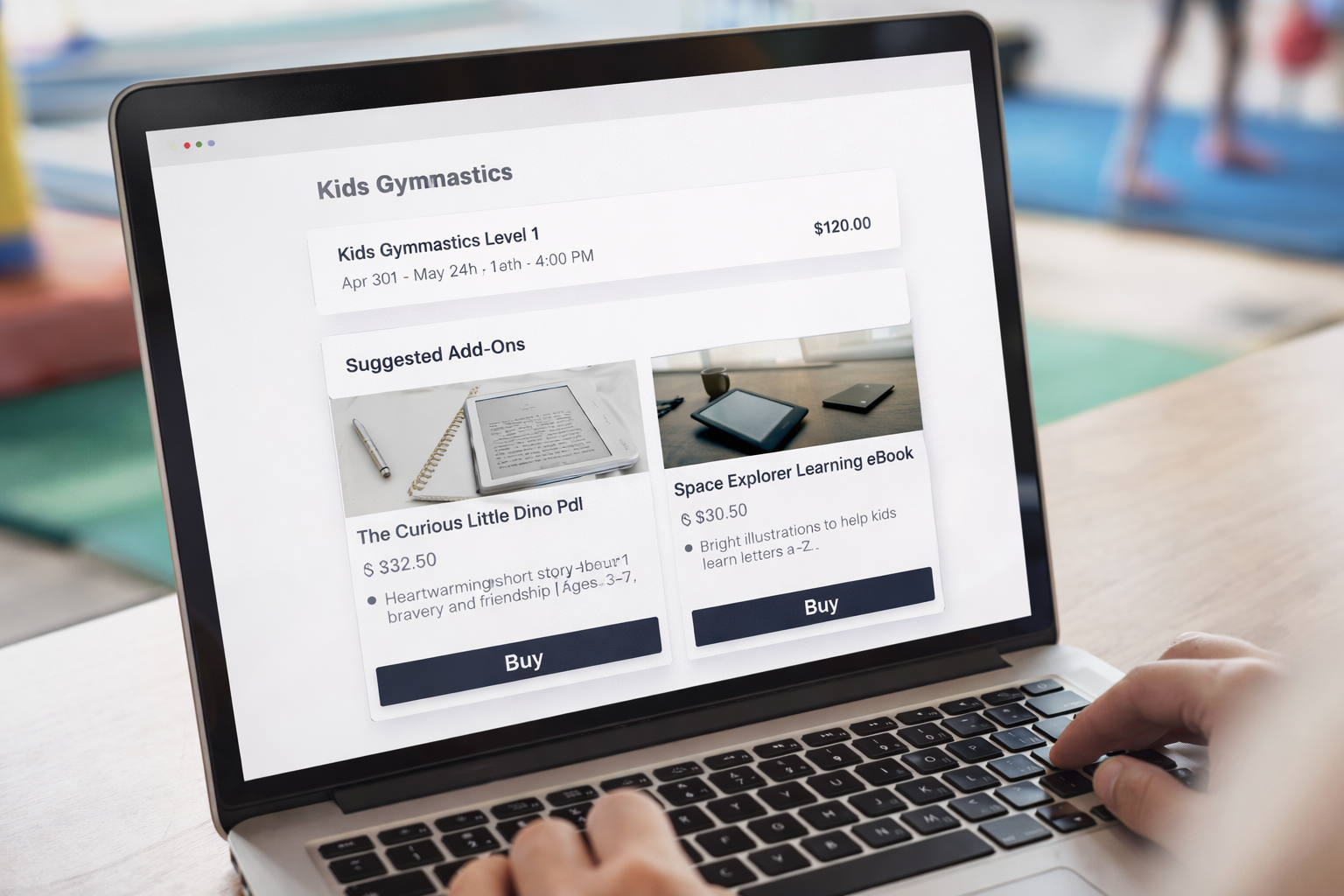
Finally, how do you implement all of the above can depend on the software you use to manage your business.
Often, many software platforms support scheduling and enrollment really well, but selling digital products often requires a bit of extra effort. While you can usually collect payment or record the sale, delivering the digital content isn’t always built in. That means businesses may end up sharing files manually through email or external links after purchase.
In these cases, digital products are possible, but the process isn’t seamless. It works as a workaround rather than a true digital sales flow, which can add extra steps for staff and create a less polished experience for customers.
However, Omnify allows you to upload digital files (videos, PDFs, etc.) directly to your account and attach them to any service as an add-on or bundle. When a customer purchases, they get instant access to the download in their account – no manual emailing or separate e-commerce system needed.
This makes it incredibly easy to implement cross-sells at checkout or include digital content with memberships. The system stores the content and delivers it automatically every time someone buys. It also keeps track of all your digital product sales, so you can see which items are driving revenue and adjust your offerings accordingly.
If your platform doesn’t support digital products out of the box, you can still make it work by using a few tools together. Many businesses take payments through their registration system and then send the digital content separately via email or a download link. Others set up a simple online store just for digital products and share those links with their customers.
The trade-off is extra effort. Managing multiple systems takes more time, and customers have to take an extra step to access the content.
Given the choice, using a platform that combines program management and digital product sales in one will make your life easier. It ensures every customer experiences a smooth, one-stop checkout.
As mentioned, Omnify is designed with this in mind – your digital products live right alongside your classes, camps, and memberships in the same store, ready to be added with one click. You can run promotions (e.g., limited-time discounts) for digital items directly in the system, and clients can always find their purchased downloads in their portal later. That level of integration means you can focus on creating and marketing great content, rather than on the technical steps of delivering it.
Conclusion
In today’s service business landscape, selling digital products alongside your programs isn’t just a trendy extra. It is becoming a staple of smart business growth. Done thoughtfully, it’s a strategy that enhances your customers’ experience while boosting your revenue.
By offering relevant digital add-ons (tutorial videos, guides, checklists, and more) at just the right moments, you’re not upselling for the sake of it; you’re providing solutions to your clients’ needs. Clients feel more prepared, members feel more supported, and you benefit from higher-value transactions and greater loyalty.
Remember to start with understanding your audience: what would help them before, during, or after your class? Create that product, price it accessibly, and present it as a helpful option. Even a single digital product sale can bump up your margins significantly and over hundreds of registrations.
With Omnify, selling digital products fits naturally into your existing booking and checkout flow. You can create digital products, attach them as add-ons to your services, and start offering them in just a few minutes.
It’s an easy way to increase revenue on every booking while giving families helpful resources they actually want.
Curious to see how it works for your center? Explore Omnify with a 14-day free trial and try selling digital add-ons alongside your programs right away.
Selling digital products with your services doesn’t have to be complicated. Learn simple ways to boost revenue and support your customers better.