.webp)
How to Sell Merchandise and Add-Ons With Online Bookings
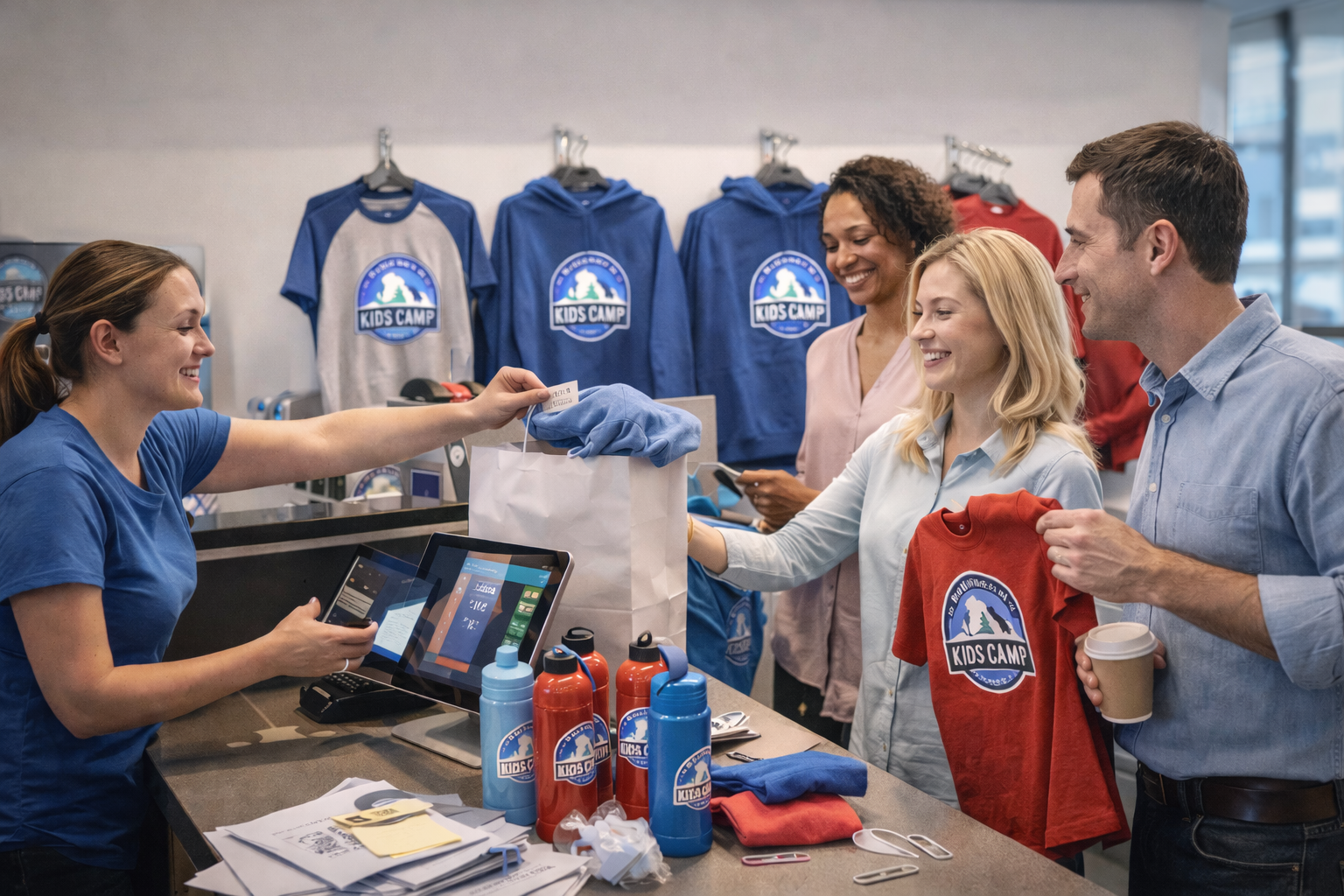
Booking services online and shopping for products online is muscle memory now. Pick a slot, add on a relevant product, pay, and done, Easy. But here’s the catch: when bookings happen online, you don’t get that face-to-face moment to read the room or make a suggestion. Your checkout page has to do the talking.
Take a kids’ ballet class, for example. A parent signs their child up and immediately starts thinking: Do we need a costume? Ballet shoes? Anything else I should know about? Before long, they’re emailing you or asking after class where to buy all this stuff. You’ve seen it happen—probably more times than you can count.
This is your cue to step in and save their day.
In fact,71% clients expected companies to deliver personalized interactions, and 76% got frustrated when it didn’t happen. When someone’s already enrolling in your program, they’re not just open to buying more; it adds value if you make things a bit easier for them. The trick is walking the fine line between being helpful and being pushy. Think “trusted guide,” not “hard sell.”
One checkout. No follow-up emails. No awkward counter conversations. Just everything handled in one smooth flow.
Now, let’s break down how to sell your merchandise alongside online bookings, without overdoing it.
Why Selling Products With Online Bookings Works?

Online booking is a high-intent moment. By the time someone reaches this stage, they’re not just browsing for ideas—they’ve already decided. The choice is made, the card is halfway out, and all they want is to get it done without jumping through hoops.
But while they’re booking, a quiet checklist starts running in their head:
- What does my child need for this class?"
- “Do I need to buy equipment separately?"
- “Is there anything I’ll be asked for later?"
- “Can I just sort everything now and be done with it?"
This is where timing makes or breaks the experience. If a parent books a session and those answers aren’t right there, one of three things usually happens: they email you later, message you at an odd hour, or forget altogether and show up unprepared. None of those are great outcomes- for them or for you.
Now flip the script,
When you offer relevant merchandise and add-ons right inside the booking flow, you’re meeting customers exactly where they are. It’s the digital equivalent of leaning over and saying, “By the way, most parents usually grab this too.” Helpful, not pushy.
And the impact shows up fast:
- Revenue per booking goes up because customers are already in buying mode.
- Last-minute questions and follow-ups drop since everything’s handled upfront.
- Parents get peace of mind, knowing they’re fully prepared.
- Checkout feels faster and more complete, with fewer loose ends to tie up later.
But here’s the thing—this only works if you get it right. The real magic lies in timing and relevance. Show the right add-ons, at the right moment, for the right booking. Do that well, and selling products alongside bookings stops feeling like an upsell and starts feeling like good service. That’s what keeps people coming back.
How to Sell Products With Online Bookings (Without Being Pushy)

Selling products alongside bookings works best when it feels thoughtful. The goal isn’t to add more steps—it’s to make the booking experience clearer, easier, and more complete for your customers. Here are a few simple principles that make all the difference.
- Keep Products Tied to the Booking
- Sell During Checkout, Not After.
- Make Add-Ons Option.
- Encourage Pre-Payment.
- Track What’s Actually Selling
Let’s dive a little deeper-
1. Keep Products Tied to the Booking

Relevance beats overload, every single time.
When someone’s booking a service, their brain is already doing enough heavy lifting. Date? Time? Location? Payment? The last thing they want is a mini shopping mall thrown at them.
Not every merchandise needs to be shown to everyone. In fact, showing too much is a fast track to decision fatigue—the “ugh, I’ll do this later” kind. And later often turns into never.
Instead, tie products directly to the booking being made. If someone is booking a yoga class, show a yoga mat or water bottle. If they’re signing up for boxing, glove rentals make sense.
If it’s a private session, offer extended time or one-on-one add-ons.
Here’s the value-add most businesses miss: relevance builds trust. When customers see only what’s useful to them right now, it feels thoughtful. You’re not pushing products, you’re answering unspoken questions.
When product suggestions are tied to the booking:
- Customers make faster decisions.
- Checkout feels lighter and less overwhelming.
- Conversion rates improve because choices are obvious.
- Support questions drop because expectations are clear.
In short, relevance cuts through the noise. Show the right product, at the right moment, for the right booking, and suddenly your checkout stops feeling like a store and starts feeling like a good experience.
2. Sell During Checkout, Not After
Because timing beats chasing people later.
Your checkout page is doing more work than you think. It’s your silent salesperson—the one that never takes a break, never forgets a line, and never makes things awkward. This is where you’d get a chance to sell the product exactly when they need it. Not later, not in a follow-up email. And definitely not at the front desk with a line behind them.
That’s the sweet spot. The real value here is momentum. Checkout is when customers are already in decision-making mode. At that point, Everyday spending cards can help keep the payment step simple and familiar Interrupt that flow later, and you’re swimming upstream.
What works best during checkout:
- Simple checkboxes that are easy to scan and select.
- Clear, human descriptions that explain why the add-on is useful.
- Transparent pricing so there are no surprises later.
Sell during checkout, and your add-ons feel like a helpful nudge. Sell after, and it feels like chasing.
3. Make Add-Ons Optional

Because nobody likes feeling boxed in.
There’s a big difference between offering options and forcing them. Optional add-ons feel like a friendly suggestion. Forced add-ons feel sneaky—and customers can spot that a mile away.
Think about your own experience. You’re booking something online, feeling good about your choice, and suddenly a must-have add-on appears at checkout with no explanation—instant red flag. Trust takes a hit.
Now, there are times when something genuinely needs to be mandatory. Uniforms for a sports program. Safety gear for certain activities. Required materials for a course. In those cases, the best move is simple: be upfront about it. Call it out early, explain why it’s needed, and don’t spring it on people at the last second.
For everything else, give customers the wheel.
Making add-ons optional:
- Keeps checkout feeling fair and transparent.
- Reduces drop-offs caused by surprise costs.
- Builds goodwill and long-term loyalty.
- Encourages genuine “yes” decisions, not grudging ones.
Bottom line: be clear, be honest, and let customers decide. When add-ons are framed as help—not a requirement—people are far more open to buying them.
4. Encourage Pre-Payment

There’s something comforting about knowing everything’s done and dusted before you even show up. That peace of mind is exactly why pre-payment works so well. When add-ons are paid for upfront, things run smoother on both sides.
From your side, Prepaid add-ons:
- Improve cash flow - Money comes in earlier.
- Reduce no-shows - people are more likely to show up when they’ve already paid.
- Save staff time - fewer transactions, fewer explanations, fewer interruptions.
- Avoid last-minute confusion - no scrambling to add items on the spot.
From the customer’s side, it’s just easier.
Picture a parent arriving with their child for class. They’re not juggling payments, questions, and a running mental checklist. They already know the shoes are sorted, the uniform’s paid for, and nothing’s been missed. They can just walk in and focus on the experience.
That’s the real value-add here: pre-payment reduces mental load. Customers don’t have to remember anything or make decisions under pressure. The trick is to make pre-payment feel natural, not forced. Offer it clearly during checkout, explain what’s included, and let customers see the benefit. When it’s positioned as convenience instead of obligation, most people are happy to say yes.
Because when everything’s paid for ahead of time, everyone shows up calmer, better prepared, and ready to go.
5. Track What’s Actually Selling

Because guessing is expensive.
When products live inside your booking flow, you’re no longer flying blind. You’re not guessing what might be popular or relying on gut feel—you can see, clearly, what people are actually buying. The data starts telling a story:
- Which add-ons do customers say yes to most often?
- Which products consistently lift the total order value?
- Which items fly off the shelf—and which just sit there?
That visibility is gold.
This data helps you simplify. When you know what’s working, you can double down on it and quietly retire what isn’t. Tracking what sells also helps with planning. You stock the right inventory, avoid over-ordering, and stop wasting money on products that don’t move. If your merchandise side is growing enough to need its own storefront, working with an ecommerce agency like Charle can help you build that out properly instead of squeezing it into your booking flow. That means fewer surprises and better margins.
In short, when your products are connected to bookings, you’re making decisions based on reality—not assumptions. And that’s how you build a system that gets better over time, without adding more work.
Common Mistakes to Avoid

Even with the best intentions, it’s easy to trip up when selling products alongside bookings. A few small missteps can turn a smooth experience into a frustrating one. The good news? These are all avoidable.
1. Too Many Options:
When checkout starts to look like a full-blown catalogue, people freeze. More choices don’t mean more sales—they mean more second-guessing. If customers have to scroll, compare, and think too hard, they’re more likely to abandon the process altogether. Keep it tight. A handful of relevant add-ons beats a long list every time.
2. Irrelevant Upsells:
If an add-on doesn’t directly help the booking, skip it. Showing random products just because they exist breaks trust. Customers can tell when something’s been shoehorned in. Stick to what actually makes sense for that service, and everything feels more thoughtful and intentional.
3. Hidden Costs:
Nothing sours a checkout faster than a surprise. If something costs extra, say it clearly. If something is required, call it out early. Transparency builds trust, and trust is what gets people to hit “Pay” without hesitation.
4. Selling after the Booking:
Once the booking is done, the mental tab is closed. Chasing customers later with emails or messages feels like extra work—for them and for you. It adds friction, creates back-and-forth, and often gets ignored. The best time to sell is when the decision is already in motion, not after it’s over.
Learn more about how to promote digital products at checkout!
The Bigger Picture: More Revenue, Less Effort

Selling add-ons during the booking process isn’t about squeezing more money out of customers. It’s about making better use of moments that already exist. You’re not chasing new leads, increasing ad spend, or stretching your team thinner—you’re simply letting each booking pull its weight.
When add-ons are built into the booking flow, a few good things start to happen naturally:
- Average booking value goes up because customers are already in decision-making mode.
- Support questions drop since expectations are clear from the start.
- On-site operations run smoother with fewer last-minute requests and surprises.
- Customers walk in happier, prepared, and ready to go.
All of this happens without adding more work to your plate.The value-add most businesses miss is compounding efficiency. Small improvements at checkout stack up over time. Fewer interruptions. Fewer manual tasks. Cleaner workflows. And a steady lift in revenue that doesn’t rely on growth hacks or constant promotions.
You’re not working longer hours. You’re not running more ads. You’re simply making each booking work a little harder—and that’s the kind of growth that actually sticks.
Read more about what products you can sell with your services!
Conclusion
At the end of the day, selling merchandise and add-ons with online bookings isn’t about pushing more products—it’s about designing a booking experience that works for real people and real situations. When add-ons are relevant, well-timed, and easy to choose, customers don’t feel sold to. They feel taken care of.
The pieces work best when they come together: relevant products tied to the booking, clear choices at checkout, upfront payments, and thoughtful limits on what’s shown. All of it reduces hesitation, cuts back-and-forth, and makes the commitment feel simple and safe. When customers know exactly what they need—and can get it all in one go—booking feels easier, not heavier.
Omnify is built to support this kind of seamless experience. From creating products to tracking what actually sells, everything runs in one place. That means less manual coordination for your team and fewer loose ends for customers.
The goal is straightforward: make the value clear, the choices intuitive, and the process friction-free. When your booking flow does that, you’re not just increasing revenue per booking—you’re building trust, consistency, and an experience customers are happy to come back to. Try our 14-day free trial soon!
Learn how to sell merchandise, add-ons and products during online bookings to boost revenue, and create a smoother customer experience.