.webp)
How to Start and Scale Early Childhood Music & Ballet Classes
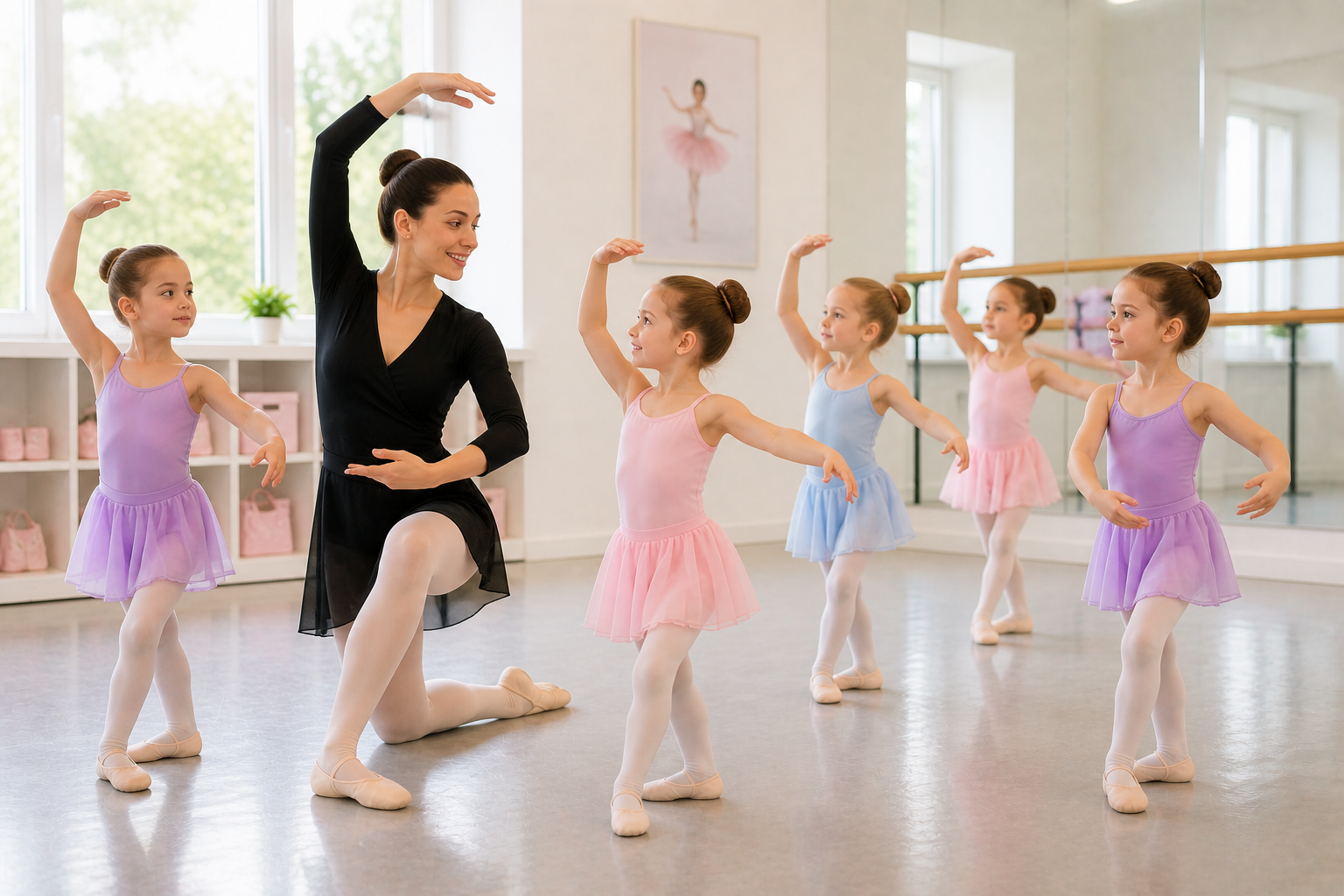
If you’ve ever watched a 3-year-old attempt their first plié, a mix of wobbly steps and pure determination, or seen them light up when they finally clap in rhythm, you know there’s something special happening in that moment. It’s not about getting the step right. It’s about trying, expressing, and figuring things out.
To parents, these classes aren’t just a way to fill time. They’re where their child builds confidence, learns to listen, follows instructions, and slowly starts to come into their own. It’s where shy kids open up, and energetic kids find focus.
That’s why this space has seen rapid growth in recent years. Music and ballet classes were once seen as something extra, now they’re becoming a core part of early childhood development.
- The global dance studio market is expected to cross $6–7 billion by 2030, with beginner programs like kids’ ballet driving a big part of that growth
- Parents are also spending more than ever. Household spending on extracurriculars has increased by 20–30% in recent years, especially in urban areas where structured programs are in high demand
And when you layer this with what we already know about early childhood development, like how most brain development happens before age five, it becomes clear why parents are starting earlier and committing more seriously.
Parents aren’t signing their kids up just because it’s adorable to watch, even though that’s definitely part of the appeal. They’re doing it because it matters to them. It feels like they’re giving their child a real advantage early on.
Because once something feels important, demand stops being the problem. So, getting started is the relatively easy part. You find a space, get a handful of kids in, run your classes, and things feel under control. But growth has a way of adding layers. Starting is straightforward. Scaling is where things get serious.
So let’s break down both, step by step.
How to Start Early Childhood Music & Ballet Classes

Before you think about scaling, you need a strong, clear foundation. Let’s start with what it actually takes to build your early childhood music and ballet program the right way.
- Define your Programs Clearly
- Design a Simple, Repeatable Curriculum
- Choose the Right Space
- Get Your First Students
- Price for Sustainability
Get these fundamentals right, and you’re not just running classes, you’re building something ready to grow. Let’s see these in detail.
1. Define your Programs Clearly
The biggest mistake you can make early on is being too vague. Saying “we offer music and ballet classes” might sound fine to you, but to a parent, it doesn’t really answer anything. They’re thinking: Is this right for my child? What will they actually learn? Will they enjoy it?
Think about it from their perspective.
If a parent has a shy 3-year-old, they’re not looking for “ballet classes.” They’re looking for something that helps their child open up, feel comfortable in a group, and slowly build confidence. If another parent has a super energetic 5-year-old, they want something structured enough to channel that energy, not just free play.
That’s why clarity matters.
Instead of being generic, break things down in a way that makes it easy for parents to say, “Yes, this is exactly what I need.”
For example, instead of saying: “We teach music and ballet,” Say something like: “Ages 3–5 beginner ballet and music program focused on building confidence, coordination, and basic rhythm through fun, structured activities.”
See the difference? It’s clearer, more specific, and much easier to connect with.
2. Design a Simple, Repeatable Curriculum
This is where a lot of programs either win or quietly fall apart. You don’t need a complicated, textbook-style curriculum. In fact, that usually backfires with young kids. What you do need is something that feels structured, predictable, and easy to follow for both kids and parents.
Because here’s the thing: parents don’t sit in your class, but they still want to feel like their child is progressing. If every class feels random, even if it’s fun, parents start questioning the value.
Think structure, without any complexity
A simple 6–8 week flow works really well:
- Weeks 1–2: Getting comfortable
Kids settle in, understand the space, and build trust with the instructor - Weeks 3–5: Skill building
Basic steps, rhythm exercises, repetition (this is where real learning happens) - Weeks 6–8: Practice + mini performance
Kids start putting things together, and parents begin to see progress
This kind of structure does two important things: Kids feel more confident because they know what to expect, and parents feel reassured because they can see improvement.
Imagine two different classes. In one, every session feels completely different. One day it’s songs, next day it’s random movements, then something else. Kids might enjoy it, but parents walk away thinking, “What are they actually learning?”
In the other, there’s a clear flow. The same warm-up, familiar steps, gradual progression, and then a small performance at the end. Same effort. Very different perception. Parents stay longer where they can see the journey.
Make it engaging (without overcomplicating it)
With younger kids, engagement is everything. You don’t need fancy setups. Just layer in small things:
- Music + movement together (not separate)
- Storytelling (“let’s pretend we’re butterflies” works better than instructions)
- Simple props like scarves, ribbons, or small instruments
These little touches make your classes feel intentional and fun at the same time.
- Studies show that structured early learning programs improve attention span and learning retention in young children
- Programs that show clear progress and milestones see significantly higher parent satisfaction and retention
(often estimated around 30–40% higher retention in structured activity programs) - And here’s the business angle:
Retention is everything. Getting new students is hard. Keeping them is what actually grows your revenue.
3. Choose the Right Space (Don’t Overspend Early)
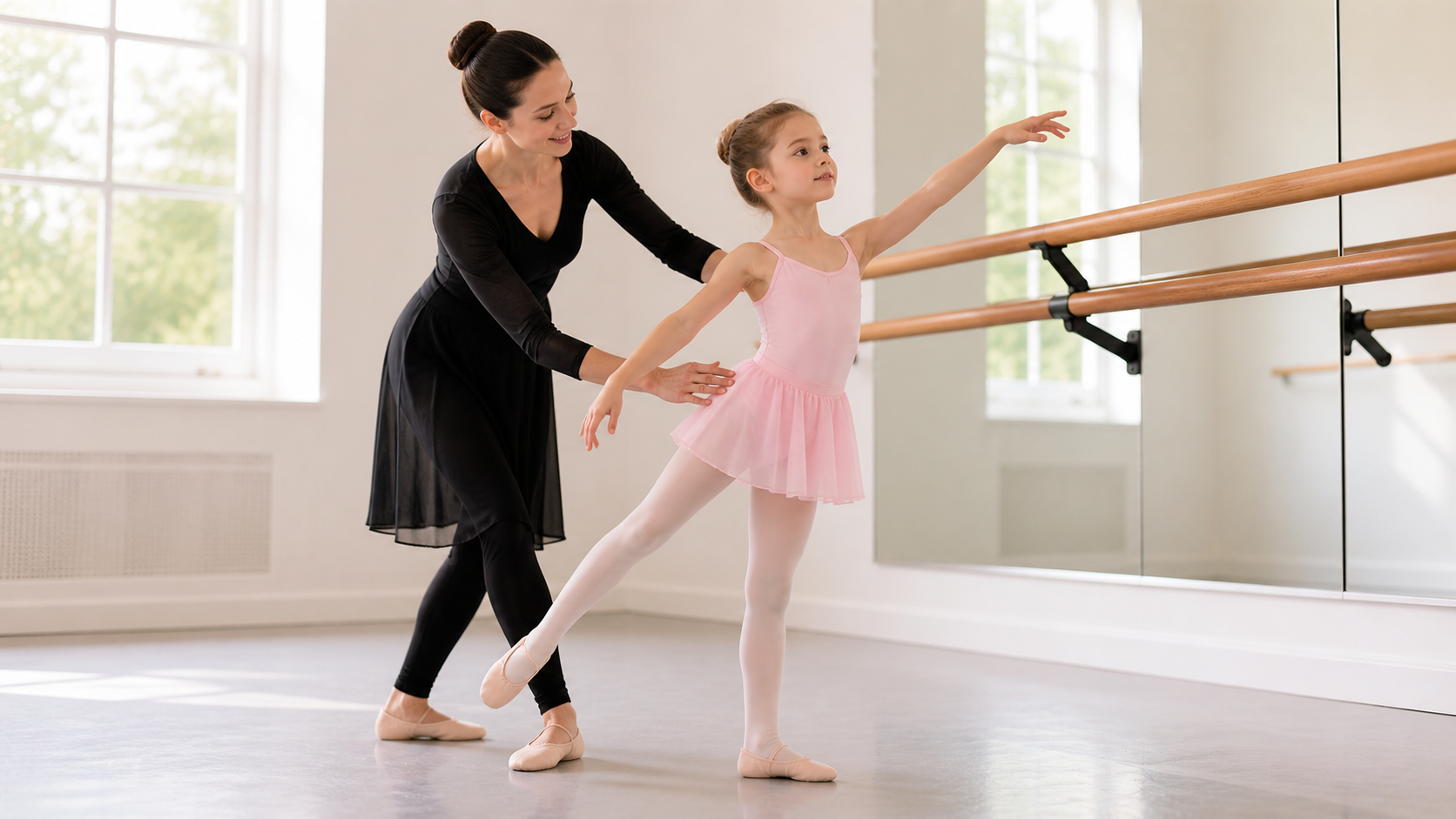
One of the easiest ways to make starting harder than it needs to be is by over-investing in your space too soon. A lot of people think they need a perfect studio from day one. Fancy interiors, full mirrors, branded walls, the whole setup. It feels like the “right” way to start.
In reality, it’s not necessary. At this stage, what matters most is whether the space is safe, functional, and comfortable for kids. Everything else can come later.
You really only need a few basics:
- Safe flooring: This is non-negotiable, especially for ballet. Kids will be jumping, turning, and occasionally falling. The floor needs to support that.
- Open, clutter-free space: Kids need room to move freely. Even a small space works if it’s well-organized.
- Basic mirrors (optional): Helpful, but not essential in the beginning. Younger kids don’t rely on them as much.
- A simple sound system: Music is central to both ballet and music classes. Even a good Bluetooth speaker can do the job.
That’s it. You don’t need anything fancy to deliver a great class experience.
Smart, low-cost options to start with:
Rent is usually one of the biggest fixed costs in any class-based business. Starting lean gives you breathing room. You don’t feel pressure to “fill seats” immediately, you can experiment with batches and timings, you can focus on quality instead of just covering costs
Many early-stage class businesses fail not because demand isn’t there, but because their fixed costs are too high too soon. Instead of locking yourself into a long-term lease, consider:
- Preschools and daycares: They already have the space and your target audience in one place
- Community halls: Affordable and flexible
- Shared studios: Rent by the hour instead of committing monthly
This keeps your costs low and your flexibility high.
4. Get Your First 20–50 Students
This is the stage where most people overthink things. You start wondering about ads, funnels, branding, websites… when in reality, none of that is what gets you your first students. At this point, you don’t need to scale. You need trust and visibility.
Skip complicated marketing:
You don’t need paid ads to get started. In fact, most early-stage class businesses get their first 20–50 students through very simple, local channels.
Focus on where parents already are:
- Local preschools and daycares- This is your strongest channel. You’re going directly to parents who already believe in structured activities.
- Parent WhatsApp groups- These groups are incredibly active. One good recommendation can fill your batch faster than any ad.
- Instagram Reels- This works especially well for kids’ activities because it’s visual. Parents want to see how classes feel.
Read more on Growing a Business on Instagram: Most Frequently Asked Questions (FAQs)
Use Content that actually works:
You don’t need polished videos or professional shoots. In fact, overly produced content can feel less authentic. What works best is simple and real, such as: Kids performing a small routine, short clips showing improvement over time, natural, candid moments during class, kids smiling, engaging, participating. This kind of content answers a parent’s biggest question: “Will my child enjoy this?”
At this stage, your goal is momentum. Get a few students in, deliver a great experience, and let that experience do the marketing for you.
5. Price for Sustainability
Pricing is where a lot of early-stage class businesses go wrong. The instinct is understandable. You want more enrollments, so you lower your prices to make it easier for parents to say yes. It feels like the fastest way to fill your batches. But cheap pricing comes with a cost.
It attracts parents who are less committed, it sets the wrong expectations, and it makes it harder for you to grow without constantly worrying about margins. Over time, it becomes exhausting to sustain. The goal is not to be the cheapest option. The goal is to be the option that feels worth the investment.
So, instead of charging per session, move towards simple, predictable structures:
- Monthly packages
This gives you consistent revenue and helps parents build a routine - Trial classes
A low-cost or free trial reduces hesitation and gets parents through the door - Bundled sessions
For example, 8 to 12 classes per month keep things structured and easier to manage
Parents are far more likely to commit when pricing feels clear and straightforward.
Scaling Your Classes the Right Way
1. Expand Through Schools (Fastest Way)

If there’s one shortcut to growth in this space, this is it. Instead of trying to find parents one by one, you go where they already are. Schools, preschools, and daycares already have your exact audience sitting in one place, every single day.
Think about it. These parents already believe in structured learning. They’ve already enrolled their kids in a program. You’re not convincing them why activities matter; you’re simply offering the right one.
Start with:
- Preschools - Perfect for ages 2–5. High conversion because kids are already in the right age group
- Daycares - Great for weekday programs and working parents
- International schools - Ideal for premium positioning and higher pricing potential
Even if just 15–20 percent of parents sign up, you’ve filled a full batch or more from a single partnership. This works well because you’ll have
- Built-in audience - You’re not starting from zero. The kids and parents are already there
- Lower marketing cost - No need to run ads or chase leads constantly
- Faster trust - If a school allows you in, parents automatically feel more comfortable
- Better retention- Kids attend classes in a familiar environment, which increases consistency
2. Open New Locations Only When Ready
Opening a second location feels like the obvious next step. Things are going well, classes are filling up, and it seems like the right time to expand. But this is also where a lot of businesses move too fast. Just because your first location is doing well doesn’t automatically mean you’re ready to replicate it. What worked once needs to be repeatable, not just successful.
To know you’re actually ready before you even think about a new location, a few things should already be true:
- Your first location is stable- Classes are consistently full or close to full, you’re not constantly firefighting small issues
- You have systems in place- Bookings, payments, attendance, and communication run smoothly without you chasing everything manually
- Your instructor training is solid - Someone else can run a class and deliver the same experience you would
If any of these are shaky, opening a new location will only multiply the problems. Timing matters so much because opening a new location increases everything, bringing in more students, more instructors, more communication, and more chances for things to go wrong
If your foundation isn’t strong, growth can feel stressful. On the other hand, when your systems are ready, a new location feels like a natural extension, rather than a completely new challenge.
3. Increase Revenue Per Student
One of the biggest mindset shifts you need while scaling is this: Growth doesn’t always mean more students. Sometimes, it simply means doing more with the students you already have.
A lot of founders focus only on filling more seats. But there’s a limit to how many kids you can fit into a class without affecting quality. That’s where this approach becomes powerful.
Your core classes are just the starting point. Once a child is already enrolled and enjoying the experience, it becomes much easier to offer them more value. Instead of constantly chasing new enrollments, you can expand what you offer to your existing base.
Start providing
- Advanced programs: Once kids complete beginner levels, give them a clear next step. Parents love progression
- Annual showcases or performances: These are huge. Parents love seeing their child perform, and they’re often willing to pay extra for it
- Holiday camps and workshops: Short-term programs during school breaks can bring in additional revenue without long-term commitment
- Merchandise: Costumes, practice kits, or simple branded items. These add to the experience and bring in extra income.
In fact, many activity-based businesses increase their revenue by 20–30% just by adding these layers, without increasing class sizes.
4. Build a Brand, Not Just a Program
At some point, your growth stops depending on how many classes you run and starts depending on how people talk about you. That’s the shift from running classes to building a brand.
Because here’s the truth. Parents don’t stay just because of what you teach. There are always other classes, other instructors, other options. They stay because of how your program makes them and their child feel.
The small things that make a big difference. This is where most brands are actually built. Not through big marketing efforts, but through consistent, thoughtful details:
- Clear communication - Quick responses, timely updates, no confusion around schedules or payments
- Professionalism - Showing up on time, being prepared, handling issues calmly
- Consistency - Every class feels reliable, no matter who is teaching or which batch it is
These seem basic, but they’re exactly what parents notice.
Parents who feel connected are far more likely to stay longer. Happy parents naturally bring in referrals, which often become your biggest growth channel. A strong brand allows you to price better and scale faster, because people trust you
In many cases, referrals alone can drive a large part of enrollments once your brand is strong enough.
Read more on How to Launch a Profitable Acro Dance Class at your Youth Activity Center
Conclusion
If you’ve made it this far, one thing should be clear: More than starting your business, keeping it consistent, growing it smoothly, and turning it into a real business is where things start to get challenging.
In the beginning, everything feels manageable. You know your students, you run the classes yourself, and things just work. But as you grow, small gaps start to show up, such as inconsistent classes, messy admin, and unclear processes. Left unchecked, these small issues turn into bigger problems that slow down your growth.
Outgrowing your current way of operating isn’t a bad thing. It’s actually a good sign. It means more parents are trusting you, more kids are joining, and your classes are becoming something bigger than just a single setup.
The programs that scale successfully recognize this shift early. They move from doing everything manually to building systems. They standardize their classes, streamline their operations, and create experiences that feel consistent no matter where or who is teaching.
That’s exactly where platforms like Omnify come in. Instead of juggling bookings, payments, and communication across different tools, you get a single system that keeps everything organized as you grow, from your first few batches to multiple locations.
Try our 14-day free trial now!
Learn how to start & scale early childhood music & ballet classes with proven strategies, real-world tips, and insights on growing demand, pricing & expansion.