.webp)
STEM vs. STEAM Camps: Which Should Your Kids' Activity Business Offer?

If you run a kids’ activity business today, you’ve likely noticed a clear shift in what parents are looking for. It’s no longer just about keeping children engaged, it’s about building real skills. And that’s exactly why STEM and STEAM camps have moved from “nice-to-have” offerings to high-demand programs that parents actively seek out.
The opportunity here is significant. Programs with a STEM focus often command higher pricing and stronger perceived value, with parents increasingly prioritizing skill-based learning when choosing activities. But with that premium comes higher expectations including structured learning, visible outcomes, and a consistently high-quality experience.
In a major US parent dataset, after-school programmes offering STEM were reported to cost more on average (mean $107/week vs $74/week non-STEM), and 72% of parents said STEM/computer science opportunities mattered in programme choice. That premium is real, but it forces operational excellence: clear progressions, tangible outputs, and high-trust safeguarding.
But research also warns that in many “STEAM” implementations, arts content is often instrumentalised (thin or absent), which weakens both outcomes and positioning.
When it comes to designing your offerings, a common question arises: Should you offer STEM camps, STEAM camps, or both? The answer isn’t always straightforward and the right choice depends on your audience, team, and long-term growth strategy.
Let’s break it down from a business perspective so you can make a decision that aligns with your audience, operational capacity, and growth goals.
Understanding the Difference: STEM vs. STEAM

Before deciding what to offer, it’s important to understand what each approach brings to the table.
STEM (Science, Technology, Engineering, Mathematics) focuses on analytical thinking, problem-solving, and technical skills. These camps often include activities like coding, robotics, engineering challenges, and science experiments.
STEAM (STEM + Arts) integrates creativity into the equation. It combines technical learning with design, storytelling, and artistic expression, such as building robots and designing them, or coding games and creating narratives around them.
STEAM is STEM plus arts/design, not as “craft time”, but as the disciplines of design thinking, creativity, storytelling, aesthetics, human-centred solutions, and communication. RISD popularised the “STEM to STEAM” framing to better prepare learners for an innovation economy, explicitly adding art/design to STEM.
Why STEM Camps Are Still a Strong Bet?
STEM camps have long been a favorite among parents who want their children to build future-ready skills.

From a business standpoint, STEM programs:
- Have clear learning outcomes (coding skills, robotics fundamentals, etc.)
- Appeal strongly to career-focused parents
- It is easier to position as “educational investments.”
- Often command premium pricing
They’re especially effective if your audience includes:
- Academically driven families
- Older kids (8–16 years)
- Parents looking for structured, results-oriented programs
If your business already has access to instructors with technical expertise, STEM camps can be a highly scalable and profitable offering.
The Growing Demand for STEAM Camps

While STEM builds logic, STEAM adds creativity, and that’s where modern learning is headed.
Today’s parents aren’t just looking for technical skills; they want their children to become creative problem-solvers, communicators, and innovators.
STEAM camps:
- Attract a broader audience, including kids who may not initially be interested in science or math
- Encourage hands-on, interdisciplinary learning
- They are ideal for younger age groups (5-10 years)
- Provide more opportunities for engaging, visually appealing marketing
From a business perspective, STEAM camps often lead to:
- Higher engagement and retention
- More diverse program formats (workshops, themed camps, creative showcases)
- Better word-of-mouth referrals
How to Decide What to Offer?

If you’re not ready to launch both right away, here’s a practical approach:
1. Start With Your Existing Strengths
Begin by evaluating your current team and resources. If you already have instructors with strong technical expertise in areas like coding, robotics, or engineering, launching a STEM program will be more straightforward and easier to execute well.
On the other hand, if your educators are more comfortable with creative teaching- design, storytelling, hands-on crafts, or experiential learning STEAM programs may be a better starting point. Building on your strengths ensures better program quality and a smoother launch.
2. Look at Your Customer Base
Your audience should play a key role in your decision. Younger children (typically ages 5–10) tend to respond better to STEAM programs, as they are more exploratory, creative, and engaging.
These programs make learning feel like play and are ideal for first-time enrollments. Older children, however, often benefit more from structured, skill-based STEM programs that focus on deeper learning and progression. Understanding your customer demographics helps you design programs that resonate and convert more effectively.
3. Test Demand Before Scaling
Instead of committing to a full-scale launch immediately, start small. Run short-term camps, weekend workshops, or trial batches to gauge interest and gather feedback. This allows you to validate demand, understand what works (and what doesn’t), and refine your offering before investing heavily in curriculum, staffing, or marketing. It’s a low-risk way to ensure that when you do scale, you’re building on proven demand rather than assumptions.
Taking this phased, practical approach helps you launch with confidence while setting the foundation for future expansion into both STEM and STEAM offerings.
Advantages of offering both STEM and STEAM-

If you have the capacity, offering both STEM and STEAM can unlock significant growth.
1. Diversified Revenue Streams
One of the biggest advantages of offering both STEM and STEAM camps is the ability to unlock multiple revenue streams without needing an entirely new business model. Instead of relying on a single type of program, you can create a layered offering that maximizes both enrollment volume and per-customer revenue.
- Run parallel camps during peak seasons
Peak periods like summer, winter breaks, and holidays are when demand is at its highest, but capacity is often your biggest constraint. By offering different types of camps (e.g., a robotics-focused STEM camp alongside a creative design-based STEAM camp), you can run parallel batches that cater to different interests and age groups. This not only increases your total enrollment capacity but also helps you avoid turning away potential customers due to limited slots in a single program. - Offer tiered pricing
With multiple program formats, you can introduce flexible pricing tiers. For example, a beginner-friendly STEAM camp can be positioned as an entry-level, lower-priced option, while an advanced STEM camp with specialized tools or certifications can command a premium. You can also create variations such as half-day vs. full-day camps or standard vs. pro-level tracks, giving parents the ability to choose based on both budget and learning goals. - Upsell advanced courses
Once a child completes a beginner or exploratory program, you have a natural opportunity to guide them into more advanced offerings. A student who starts with a STEAM camp can be upsold into a structured STEM program, or a basic coding camp can lead to an advanced robotics or AI course. This not only increases revenue per customer but also builds long-term engagement, turning one-time camp attendees into repeat enrollments across seasons.
In essence, diversified programs help create a sustainable revenue engine that grows with your customers.
2. Year-Round Engagement
One of the biggest challenges for kids’ activity businesses is maintaining consistent enrollments beyond peak seasons. This is where a thoughtful mix of STEAM and STEM programs can help you create a year-round engagement model rather than relying only on seasonal spikes. Here, year-round engagement isn’t about running more programs but about connecting them into a continuous experience.
To create year-round engagement, the goal is to move beyond one-time camps and design a continuous learning journey for your students. Start by using STEAM camps during holidays as an entry point to attract new enrollments. Once children are introduced, guide them into ongoing STEM programs that focus on deeper, skill-based learning.
Building clear progression pathways from beginner to advanced levels helps parents see long-term value and encourages repeat participation. You can further strengthen retention by offering memberships or recurring classes, ensuring consistent engagement and predictable revenue.
Finally, align your programs with the school calendar by combining seasonal camps with weekly classes, so there’s always a relevant offering available. This approach turns short-term interest into sustained participation throughout the year.
3. Stronger Brand Positioning
Offering both STEM and STEAM programs allows you to position your business as more than just a specialized activity provider and it helps you become a comprehensive learning hub for families.
Instead of being known only for coding, robotics, or creative workshops, you’re seen as a place where children can explore, learn, and grow across multiple disciplines. This broader positioning builds stronger trust with parents, as they prefer enrolling their children in a single, reliable platform that can support different interests and skill levels over time. It also makes your brand more competitive and memorable in a crowded market, giving you an edge over niche providers who offer limited experiences. Over time, this perception translates into higher retention, more referrals, and a stronger long-term brand presence.
Operational considerations you shouldn’t ignore
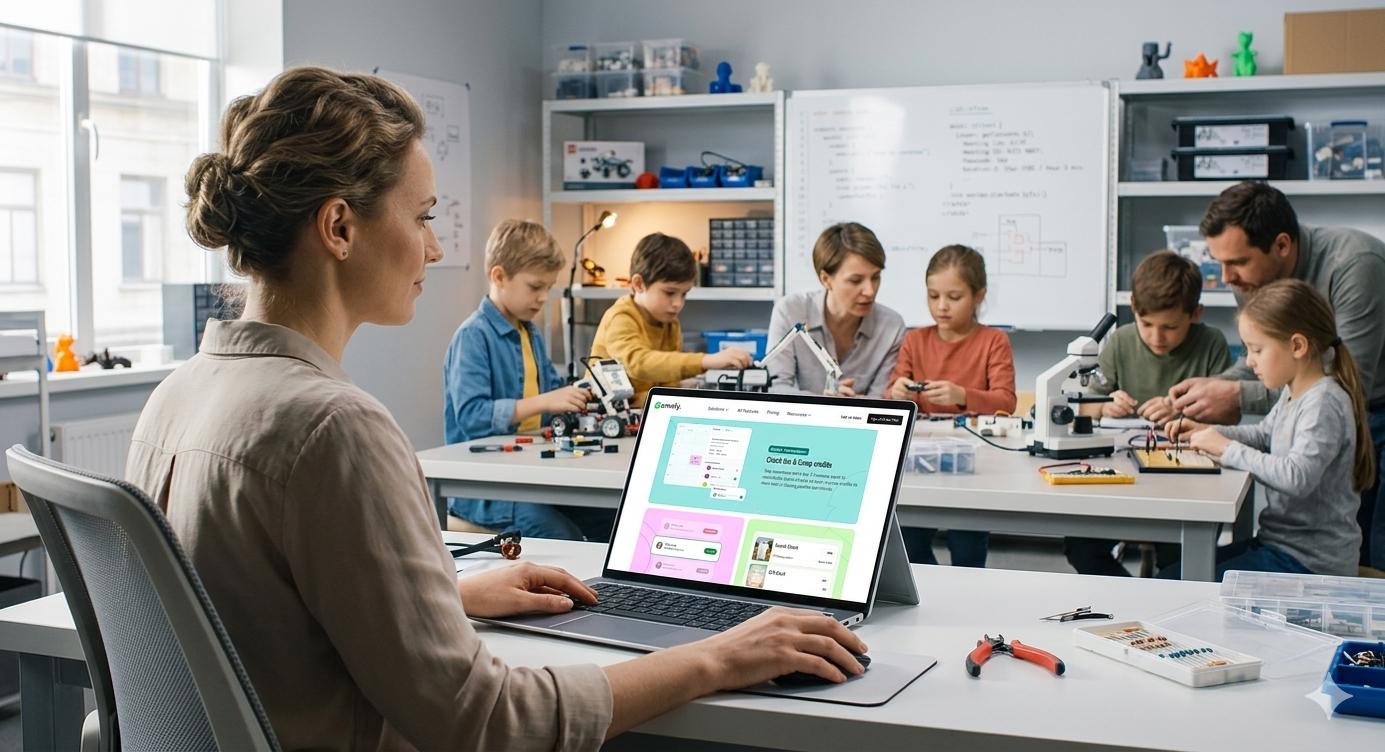
Expanding into both STEM and STEAM programs can unlock growth but it also adds a layer of operational complexity that needs to be planned for upfront. Without the right structure, managing multiple program types can quickly become overwhelming for your team.
1. Curriculum Planning
Curriculum planning is the first piece to get right. STEM programs typically require structured, outcome-driven lesson plans with clear progression from basic concepts to more advanced skills. STEAM programs, on the other hand, need to be more flexible and activity-driven, allowing room for creativity and exploration. Balancing these two approaches means designing curricula that are both consistent and adaptable, depending on the format and audience.
2. Instructor Training
Your team needs to be equipped to deliver both technical and creative learning experiences. This often means going beyond subject expertise—trainers should be comfortable adapting their teaching style based on age groups, learning pace, and engagement levels. A 6-year-old in a STEAM camp requires a very different approach than a 14-year-old in a robotics program.
3. Scheduling & Capacity Management
Scheduling and capacity management becomes more complex as you introduce multiple program types. Running parallel camps or classes requires careful planning allocating instructors, managing time slots, and ensuring facilities are used efficiently without overlaps or underutilization. Even small inefficiencies here can lead to lost revenue or a poor customer experience.
How to make it work?
Here are a few things that you can do-
- Manage registrations across camps with camp registration software
- Handle different pricing structures
- Track performance across programs
- Communicate with parents efficiently
This allows you to focus on delivering great experiences while your operations run smoothly in the background.
Conclusion: Building a Future-Ready Program Strategy
If you’re looking for a practical starting point, hybrid STEM + STEAM camps offer a smart middle ground. Hybrid formats not only appeal to a wider audience but also simplify operations, making them a great way to test demand before scaling further.
When it comes to choosing what to offer, the answer doesn’t have to be complicated. Start with what aligns best with your current strengths and audience and expand gradually.
But if your goal is to build a scalable, future-ready kids’ activity business, offering both is ultimately the winning strategy. It allows you to reach a broader set of families, increase enrollments, and create long-term engagement through structured learning pathways.
The bigger opportunity here goes beyond just running successful camps. The demand for skill-based, experiential learning is only growing, with parents actively seeking programs that prepare their children not just for academics, but for real-world problem-solving and creativity.
Omnify helps kids’ activity businesses run and grow their camps seamlessly- from setting up STEM, STEAM, or hybrid programs to managing enrollments, memberships, and payments, all in one place. Whether you’re running seasonal camps or year-round learning programs, you can automate operations, track performance, and deliver a smooth experience for both parents and students.
So while you focus on building impactful learning experiences, Omnify ensures your operations run effortlessly in the background.
👉 Ready to scale your camps? Explore how Omnify can help you grow.
STEM vs. STEAM camps: which should your kids’ activity business offer? Learn how to choose the right mix to increase revenue and build a future-ready program.