.webp)
Why Most Activity Studios Underprice Their Classes
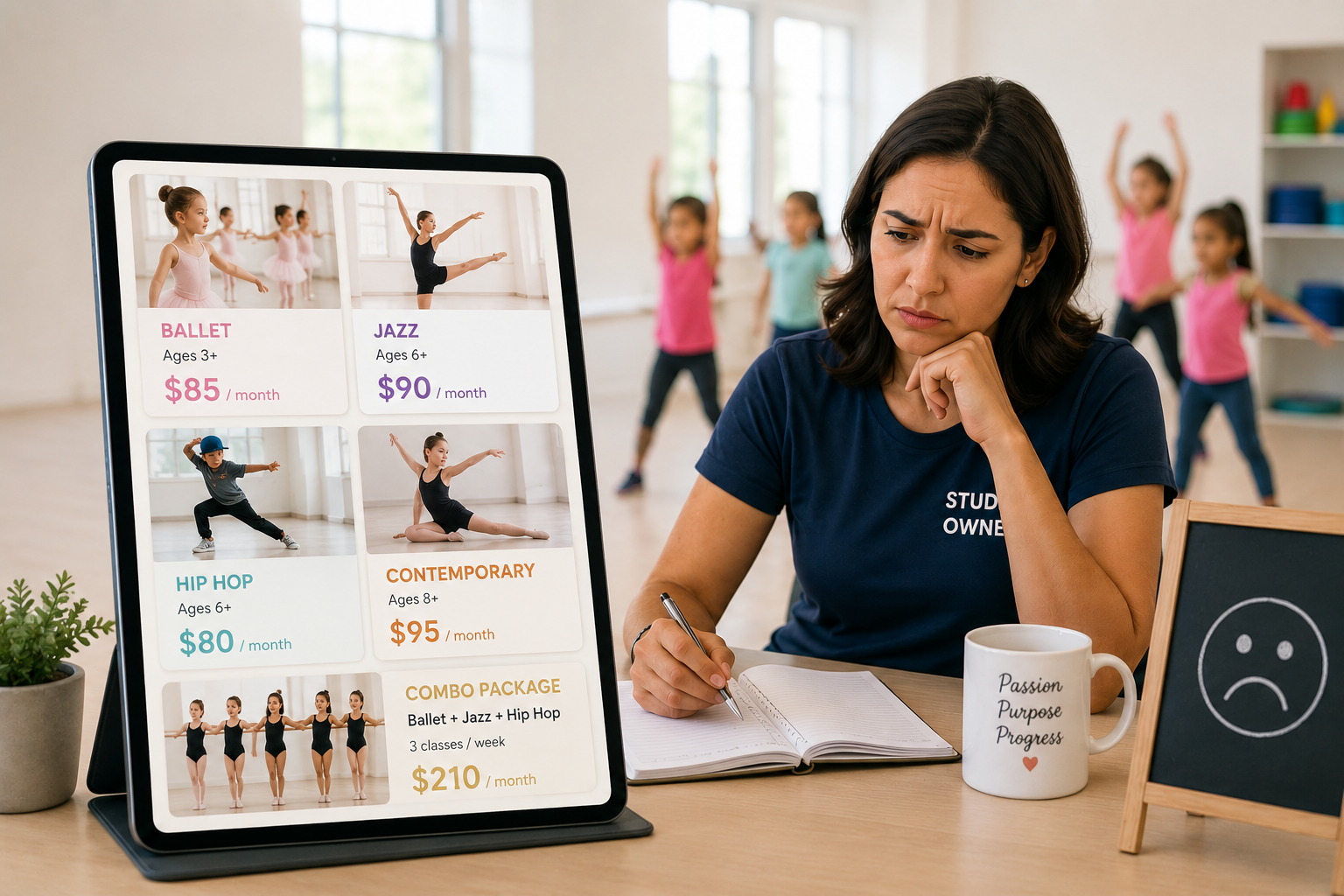
“I charge $20 per class because that’s what everyone else charges.”
Pricing is one of the hardest decisions for businesses.
Whether you run a swim school, dance academy, martial arts studio, gymnastics center, or kids enrichment program, there’s always pressure to stay “competitive.” And in most cases, competitive simply becomes another word for cheaper.
Studio owners often look around their local market, compare rates, and price their classes accordingly. The pricing usually factors things like competitor rate, location, customer-perceived value, and so on.
- “The studio nearby charges $25, so we should too.”
- “Parents in this area won’t pay more.”
- “We’ll lose enrollments if prices increase.”
At first, this approach feels safe. But over time, it creates a much bigger problem: businesses start undervaluing the very experience they’re working hard to deliver.
And that impacts far more than revenue.
Most studio owners don’t underprice because they lack value; they underprice because they lack confidence in communicating it. Let’s break this down.
What is the biggest pricing mistake that activity studio owners can make?
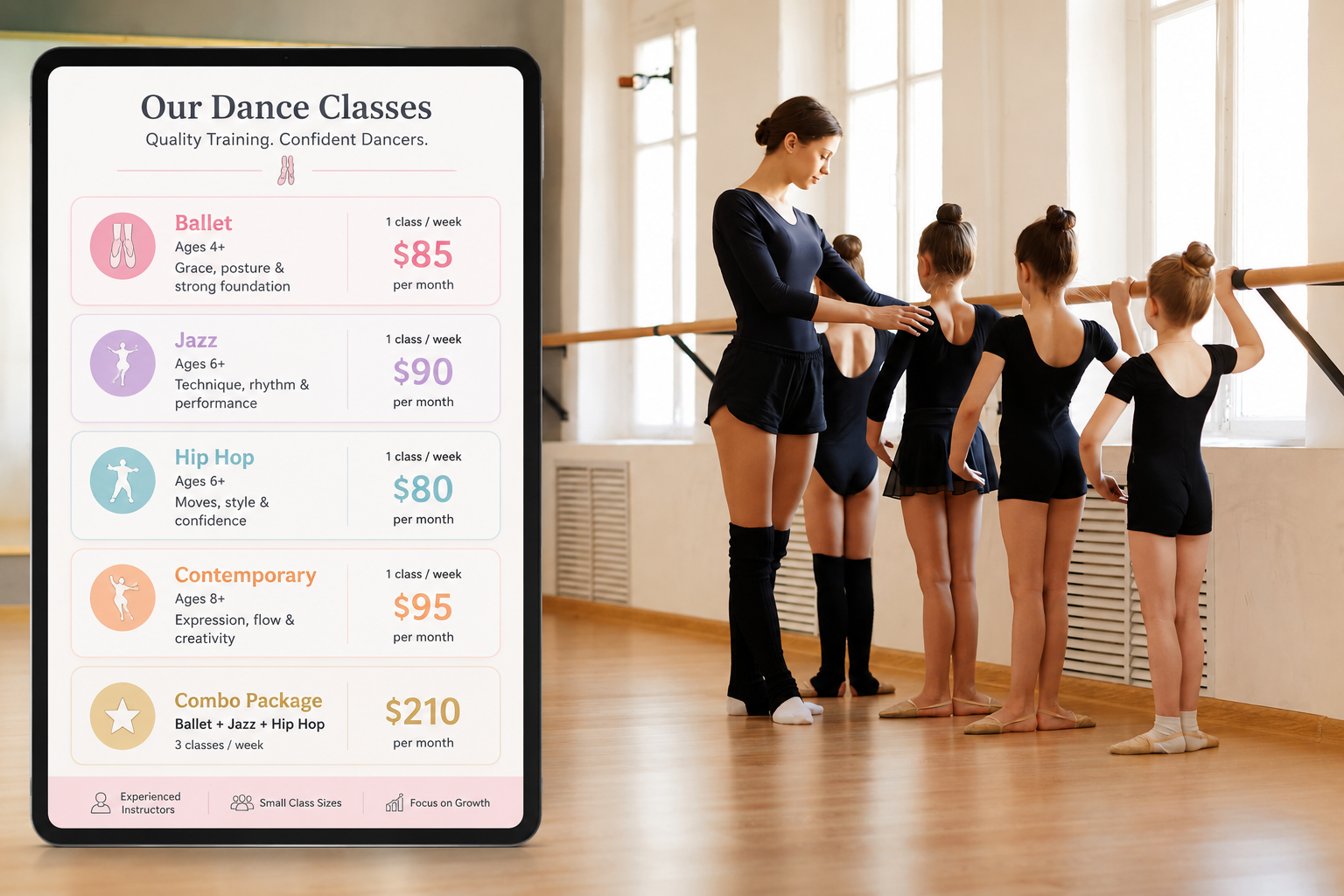
One of the most common pricing mistakes activity studio owners make is setting prices based entirely on what nearby competitors are charging. A dance studio charges $25 per class, so another studio feels they should charge the same. A swim school nearby offers discounts, so everyone else starts lowering prices too.
Over time, pricing becomes less about the actual experience being delivered and more about trying to stay “competitive.”
But the reality is, your biggest competition usually isn’t the studio down the street. It’s everything that makes families choose to stay home instead.
Today, parents are constantly competing for their children’s attention against YouTube, video games, streaming platforms, and so on for longer screen time. So when they decide to commit to an activity, they’re rarely looking for something that feels genuinely worthwhile.
What they’re truly paying for is a child’s interest, enjoyment, learning, progress, safe space, improvement, confidence build-up, and an organized and professional experience, along with skill development. And this is where many studio owners underestimate the value of what they provide.
A well-run activity studio is not just selling classes. It’s offering structure, guidance, consistency, personal growth, and a meaningful experience for both children and parents. Hence, businesses focusing only on matching competitor pricing, they often end up undervaluing all of those things.
Why Underpricing Hurts Your Studio

Lower pricing might feel like a way to attract more customers, but it often does the opposite. Here’s what typically happens:
1. You Attract Less Committed Families
When classes are priced very low, parents may see them as something easy to try, skip, or leave without much consideration. Attendance often becomes less consistent, sessions are treated more casually, and long-term commitment tends to weaken. Families may drop out earlier or move between activities more frequently because the emotional and financial investment feels low.
This doesn’t mean customers only value expensive programs. But in many cases, pricing influences how committed families feel toward showing up regularly, staying engaged, and following through with long-term progress.
2. You Create Revenue Pressure
When studios keep prices too low, they often end up relying on volume just to maintain revenue. To make the numbers work, businesses feel pressured to increase class sizes or add more sessions, extend working hours, or constantly enroll more customers every month, and so on.
Over time, this puts pressure on both the business and the people running it. Studio owners spend more time managing operations than improving the customer experience. And classes can start feeling rushed, overcrowded, or less personalized. And all of this affects the long-term growth of the business.
3. You Devalue Your Expertise
Most activity studio owners spend years building their expertise. They invest time into certifications, specialized training, teaching experience, curriculum development, and learning how to work effectively with children and families.
But when pricing is set too low, all of that experience can start feeling invisible to customers. And once a studio becomes known mainly for being “cheap” or “budget-friendly,” changing that perception later becomes extremely difficult. That’s why pricing should reflect not only the class itself, but also the years of expertise, effort, structure, and experience behind it.
What do most Studios/Businesses ignore while setting up prices for their services?
Many activity studios think pricing is only about affordability. They worry that charging more will push families away, so they keep prices low to stay “safe” or competitive. But what many businesses overlook is that pricing also shapes perception. Before a parent ever walks into your studio, pricing already starts influencing how they view your business.
What Lower Pricing vs Premium Pricing Signals to Parents
Conclusion:
Pricing is never just about affordability. It reflects the value, experience, and trust your studio creates for families over time. The most successful activity businesses are rarely the cheapest, they’re the ones that consistently deliver meaningful experiences parents feel confident investing in.
With Omnify, studios can build more sustainable pricing models through memberships, tiered plans, add-ons, product sales, gift cards, discounts, recurring payments, and flexible revenue opportunities- helping businesses grow without relying solely on lowering prices.
If you’re looking to create a more sustainable and scalable studio business, explore how Omnify can help simplify operations, improve customer experience, and support smarter pricing strategies as your studio grows.
Learn why most activity studios underprice their classes, how pricing shapes customer perception, & how studios can grow without relying only on affordability.