.webp)
How AI Agents are Changing Professional Video Editing
TL;DR
AI agents are changing how creators approach professional video editing by handling repetitive tasks, organizing footage, and supporting complex editing workflows. Instead of replacing editors, they help teams move faster by taking care of time-consuming steps. This guide explains how online AI video editing workflows work, where AI agents fit, and how creators can keep control over the final video.
Introduction
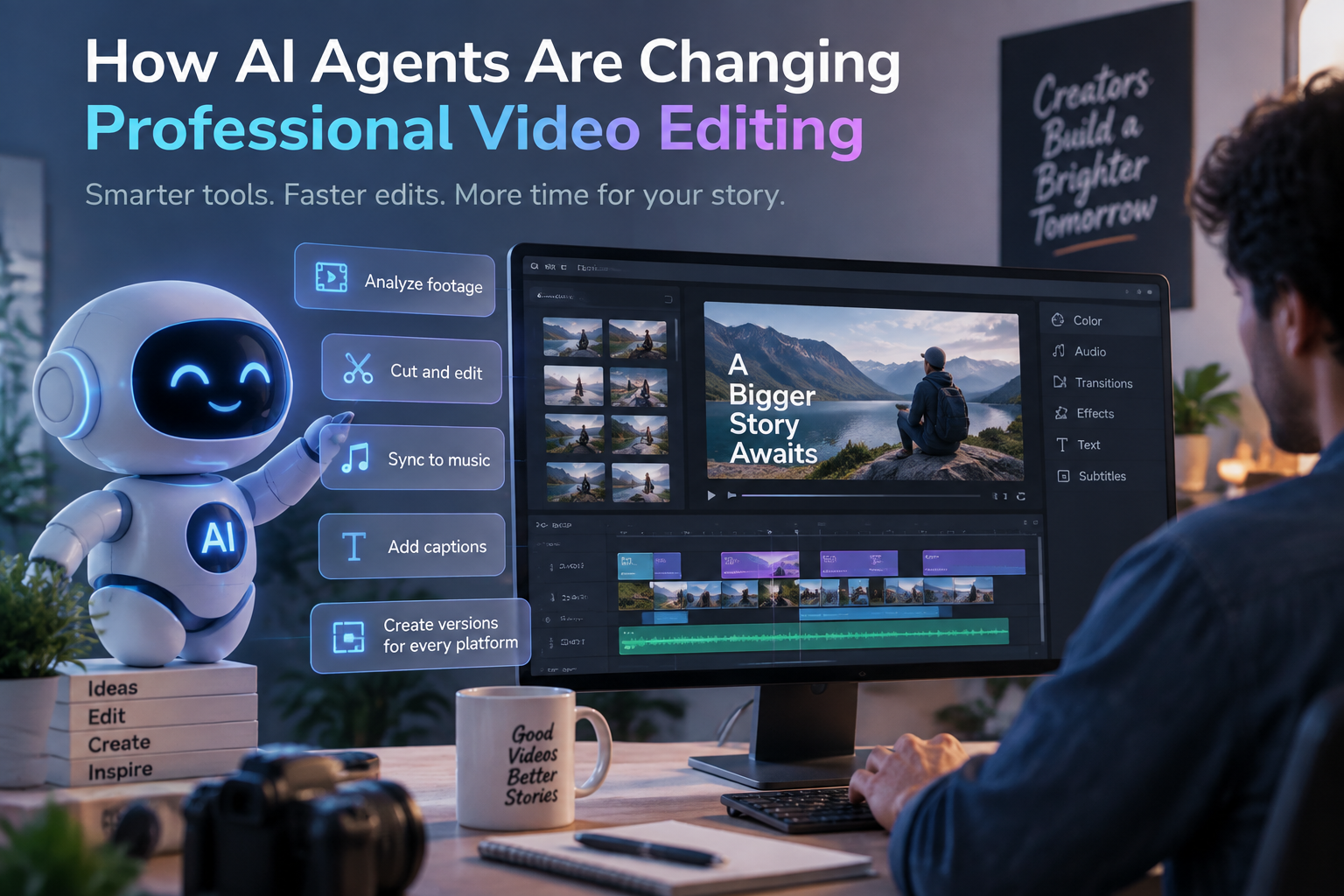
Creating a professional video takes more than recording good footage. Editors often spend hours reviewing clips, finding the best moments, fixing audio, creating rough cuts, and preparing different versions for each platform. For many teams, the challenge is not having enough ideas. The challenge is turning raw footage into polished content quickly. This is where online AI video editing is changing the process by helping creators handle repetitive editing tasks without losing creative control.
Video has become a major part of how businesses communicate. According to Forbes Advisor, 91% of businesses reported using video as a marketing tool in 2023, showing how important video production has become for modern teams. Forbes Advisor video marketing statistics AI agents bring a new approach to editing. Instead of only applying effects or generating clips, they can understand instructions, work through multiple editing steps, and return editable results. The editor still makes the creative decisions, but the workflow becomes faster and easier to manage.
How do AI agents improve video editing workflows?
AI agents improve video editing workflows by taking care of repetitive tasks such as footage review, clip organization, rough cuts, and content adjustments. They help editors spend more time on storytelling, creative choices, and final quality instead of manual cleanup. Traditional editing often starts with reviewing hours of footage. An editor needs to identify useful moments, mark important clips, and understand the overall structure before making the first cut.
AI agents can support this stage by analyzing footage and helping creators find relevant sections faster. They can identify people, actions, objects, and ideas inside videos, making large projects easier to navigate.
For example, a creator working on an interview video may need to:
- Find the strongest answers from multiple recordings
- Remove repeated takes
- Cut long pauses
- Organize clips by topic
- Create shorter versions for social platforms
An AI-powered editing workflow can assist with these steps by understanding the project context and following instructions. This does not remove the need for editors. Instead, it gives them a faster starting point and more time to focus on pacing, storytelling, and audience experience.
What tasks can online AI video editing tools handle?
Online AI video editing tools can support many parts of production, from organizing raw footage to creating platform-ready versions. They can help with editing tasks such as selecting clips, improving structure, adjusting timing, and preparing different formats.
Modern editing workflows often involve many small tasks that take time but require less creative decision-making. AI agents are useful in these areas because they can follow clear instructions and complete multiple steps together.
Common tasks include:
- Reviewing footage and selecting useful takes
- Creating first drafts with or without a script
- Matching the pacing of a reference video
- Removing filler words and long pauses
- Creating chapter markers
- Finding moments based on keywords or actions
- Preparing shorter clips for different platforms
- Generating or suggesting supporting visuals
For businesses creating regular video content, these improvements can make production more consistent. A marketing team can create product videos, social clips, and educational content without repeating the same manual steps for every project. Video content also plays an important role in lead generation. Businesses that use video as part of their marketing strategy can combine educational content with stronger customer engagement.
How do AI agents support professional video editing?
AI agents support professional video editing by acting as assistants that can complete editing tasks based on natural language instructions. They help manage complex projects while keeping the editor in control of the timeline, structure, and final decisions. Professional editing involves many connected steps. A small change in one section can affect the entire timeline. This is why AI agents need to understand more than individual clips.
A capable AI editing workflow can help with:
Footage understanding
AI agents can review footage and understand what is happening inside the content. This helps editors quickly locate specific moments without manually searching through every clip.
Timeline assistance
Instead of only suggesting changes, advanced AI editing systems can work directly on the timeline. They can arrange clips, adjust timing, and create a starting version that editors can refine.
Content adaptation
A single video often needs multiple versions. A long interview may become a YouTube video, short clips, social posts, and promotional content. AI agents can help create these variations faster. Invideo Editor is an example of an editing workflow where AI agents can assist with professional video creation. The platform allows creators to assign editing tasks, review changes, and keep the final timeline editable.
For creators looking for an advanced workflow, an AI agentic video editor works by using AI agents that handle real editing tasks based on direction. These agents can watch footage, work on the timeline, and return a cut that remains under the creator’s control.
Building faster edits without losing creative control
AI agents are designed to support creative decisions, not replace them. The best workflows combine automation with human review.
Editors still decide:
- Which story should be told
- Which emotions matter most
- How the final video should feel
- Which moments connect with viewers
AI helps with the execution layer. It can prepare drafts, organize content, and reduce repetitive work. For example, a documentary editor may spend less time searching through hours of interviews and more time shaping the narrative. A social media team may create more content variations without rebuilding every edit manually.
This balance is important because professional video editing depends on judgment. Timing, emotion, and storytelling are creative choices that still require human input.
Where does online AI video editing fit into modern content teams?
Online AI video editing fits into modern content teams by helping creators produce more videos without adding unnecessary complexity. It is especially useful for teams managing multiple formats, platforms, and frequent publishing schedules. Businesses today create videos for websites, social media, ads, training, and customer education. Each channel needs different formats and editing styles.
AI-assisted workflows can help teams manage this demand by supporting:
- Social media cutdowns
- Product videos
- Educational content
- Customer testimonials
- Internal communication videos
- Marketing campaigns
An editor can start with one main project and create multiple versions faster. For example, a product demonstration can become a full-length video, a short social clip, and a website video. Invideo Editor combines browser-based editing with AI assistance to help creators work with raw footage, create drafts, and refine professional edits through an editable timeline. The goal is not to remove the editor from the process. It is to make the editing workflow easier to manage.
Choosing the right AI editing workflow
The right AI editing workflow depends on the type of content being created. Different creators need different levels of automation and control.
Before choosing an online AI video editing solution, consider:
Project complexity
Short social videos may need simple automation, but documentaries, interviews, and brand videos require deeper editing support.
Creative control
A good workflow should allow editors to review changes and adjust the final result.
Editing requirements
Look for features that match your needs, such as multicam editing, audio cleanup, captions, visual effects, and platform-specific exports.
Team collaboration
Teams should consider whether the workflow makes it easier to share projects, review edits, and maintain consistency. The future of editing is moving toward collaboration between creators and AI systems. Editors remain responsible for creative direction, but AI helps them complete more work efficiently.
Conclusion
AI agents are changing professional video editing by making complex workflows faster and easier to manage. They can help with footage review, first drafts, timeline changes, content variations, and repetitive editing tasks. Online AI video editing gives creators a way to handle more content without spending all their time on manual work. The biggest value comes from combining AI assistance with human creativity.
Tools like invideo editor show how AI can support professional workflows by helping creators manage edits while keeping control over the final result. If you create videos regularly, explore how AI agents can fit into your editing process and identify the tasks where automation can save the most time.
What part of video editing would you want an AI agent to handle first?

Learn how AI agents improve video editing workflows by handling repetitive tasks, organizing footage, and helping creators make professional edits faster.