.webp)
First-Come, First-Served vs. Lane Reservations: Which Works Better for Community Pools?

Every community pool reaches this point eventually.
A few lap swimmers arrive early. Swim lessons are about to begin. Families are waiting for recreational swim. The local club has practice scheduled. Suddenly, everyone wants access to the same lanes at the same time.
That's when one question comes up: Should lanes be available on a first-come, first-served basis, or should swimmers reserve them in advance?
There's no one-size-fits-all answer.
What works well for a neighborhood pool with occasional peak hours may not work for a busy municipal facility managing hundreds of swimmers every day. The right system depends on who uses your pool, how busy it gets, and the experience you want to create for your community.
In this guide, we'll break down the pros and cons of both approaches, look at where each works best, and help you decide which lane management strategy makes the most sense for your facility.
Understanding the Two Approaches
- What is the First-Come, First-Served (FCFS) approach in community pools?

With a first-come, first-served (FCFS) system, swimmers simply arrive at the pool and use any available lane. If all lanes are occupied, they either wait for one to open up or come back later.
It's the traditional approach followed by many public and community pools because it's simple, familiar, and easy to manage. There are no advance bookings to coordinate, making it a low-maintenance option for both staff and swimmers.
- What is the meaning of Lane Reservations?

With lane reservations, swimmers book their lane or preferred time slot before they even arrive, usually through an online booking system or mobile app.
While this approach became popular during the pandemic as a way to manage capacity, many community pools have continued using it long after. Why? Because it gives swimmers greater certainty and helps facilities plan their schedules more efficiently. Everyone knows what to expect before they walk through the door.
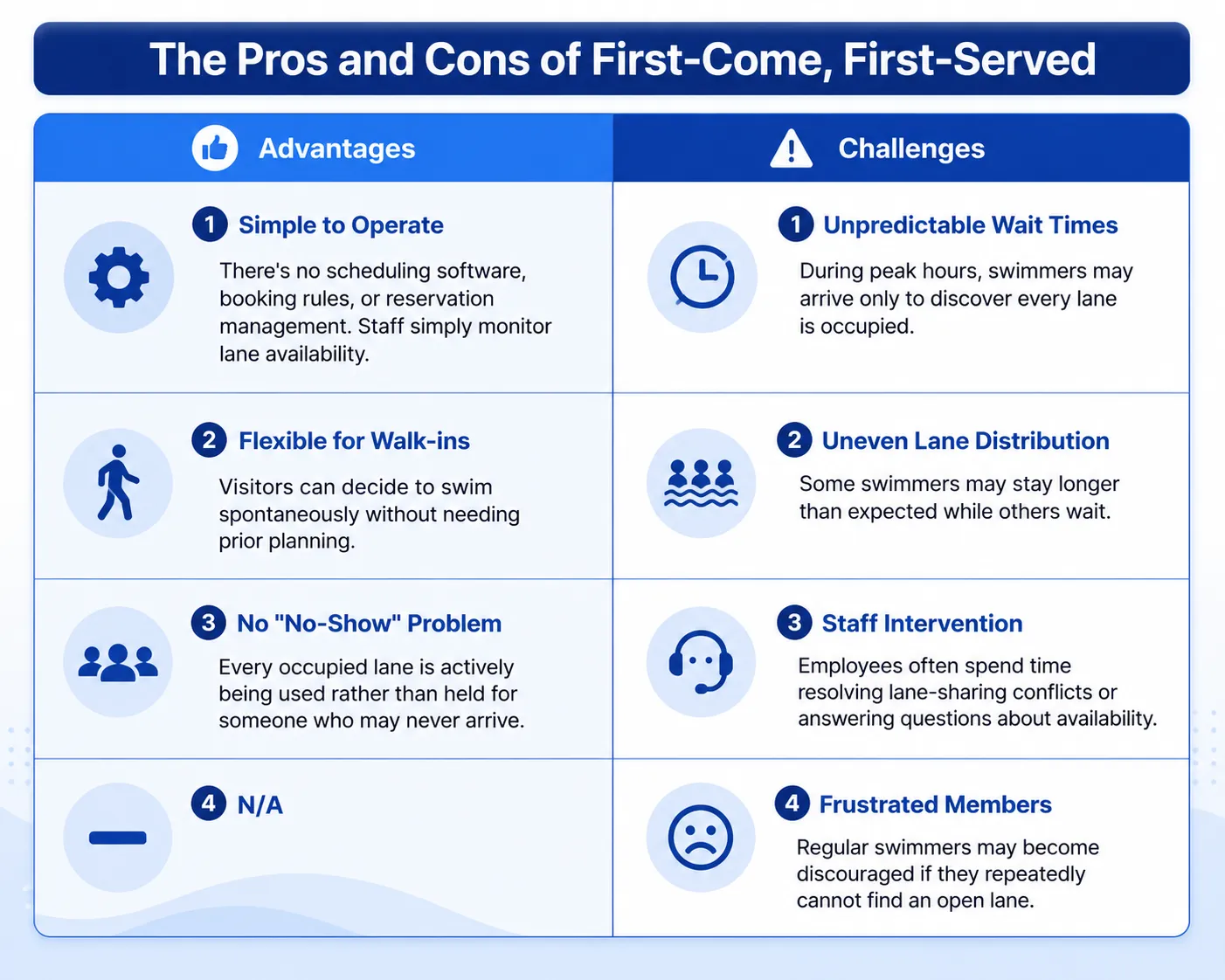
The Pros and Cons of First-Come, First-Served
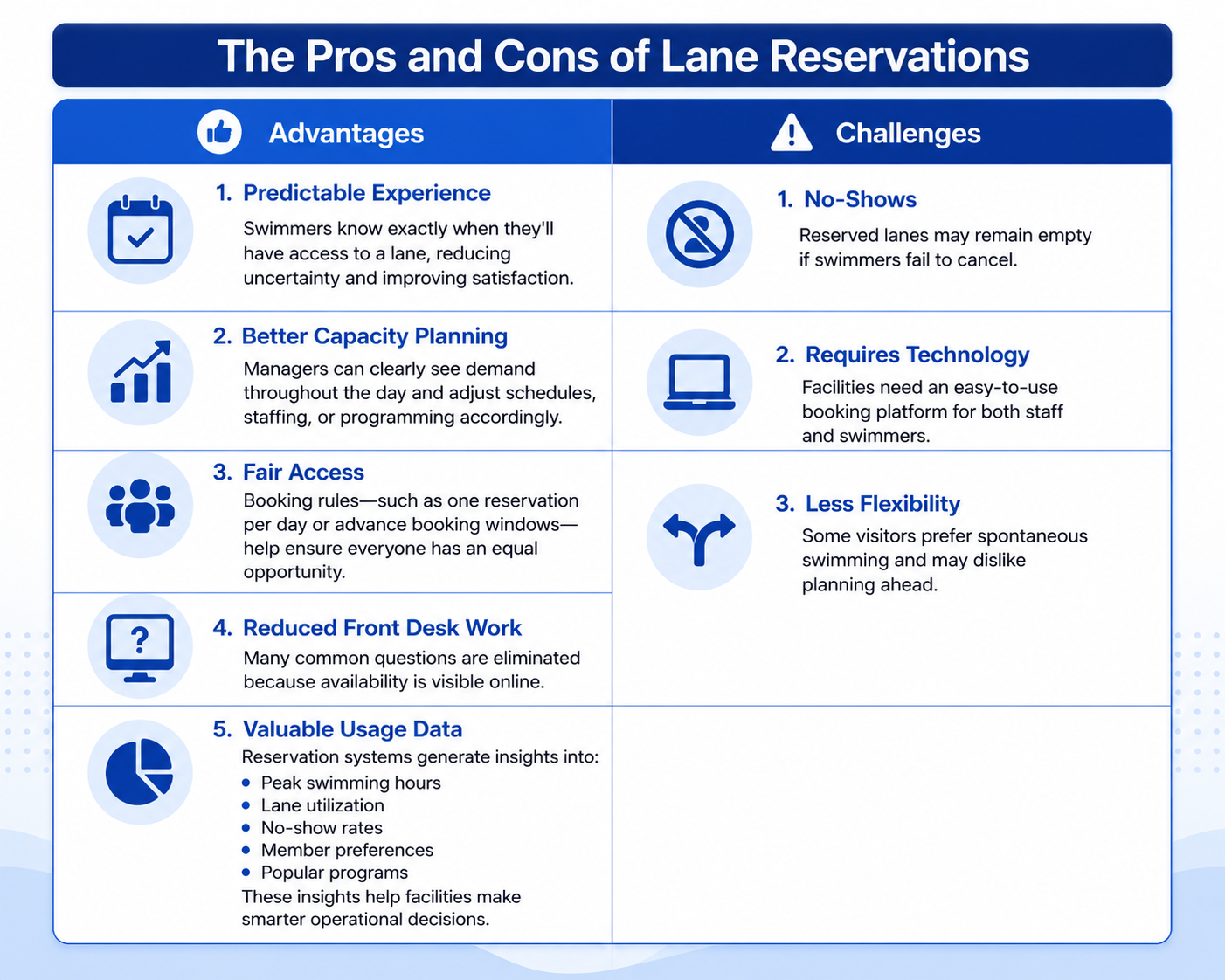
The Pros and Cons of Lane Reservations
Which System Works Better?

The answer depends on how your facility is used.
- First-Come, First-Served is ideal when:
A first-come, first-served (FCFS) approach works best for pools where demand is generally manageable, and lanes are rarely at full capacity. If swimmers visit at different times throughout the day instead of during concentrated peak hours, there's usually enough availability for everyone without requiring advance bookings. This system is also a great fit for facilities that primarily serve casual or drop-in visitors who value the flexibility to swim whenever they choose. Since there are no reservations to manage, it's a practical option for community pools with limited administrative staff or those looking to keep operations simple and easy to maintain.
- Lane Reservations are better when:
Lane reservations are a better choice for pools that regularly experience high demand, especially during mornings, evenings, weekends, or seasonal peaks. When more swimmers want lanes than the facility can accommodate, allowing reservations helps distribute access more fairly and reduces frustration caused by long wait times. This approach is particularly valuable for facilities that manage a mix of lap swimming, swim lessons, club training, water fitness classes, and other scheduled programs, where coordinating lane availability is essential. Reservation systems also give managers a clear view of booking patterns, occupancy, and peak usage, making it easier to optimize staffing and schedules. Most importantly, they create a more predictable experience for swimmers by ensuring they know exactly when a lane will be available, leading to higher member satisfaction.
Many Community Pools Use a Hybrid Model
For many community pools, the best solution isn't choosing between first-come, first-served and lane reservations; it's combining the strengths of both.
A hybrid model gives regular swimmers the certainty of booking in advance while still keeping the pool accessible for spontaneous visitors. For example, a facility might reserve four lanes for online bookings and leave two lanes available for walk-ins throughout the day. If a reserved swimmer doesn't arrive within a defined grace period, that lane can be released to waiting visitors. Similarly, lanes can be blocked for swim lessons, team practices, or special programs only during designated hours, allowing them to remain open for public use the rest of the day.
This balanced approach helps pools maximize lane utilization, reduce wait times, and accommodate different types of swimmers without sacrificing flexibility. It's one of the most effective ways to deliver a better experience while making the most of limited pool capacity.
How Technology Makes Lane Reservations Easier
Modern booking software eliminates much of the administrative burden associated with reservations.
With the right platform, swimmers can:
- Book lanes online anytime
- View real-time availability
- Receive booking confirmations and reminders
- Cancel or reschedule easily
- Join waitlists when sessions are full
Meanwhile, staff can:
- Set booking limits
- Create recurring schedules
- Block lanes for maintenance or programs
- Track attendance
- Generate utilization reports
- Reduce front desk phone calls
How Omnify Helps Community Pools Manage Lane Reservations
Whether your facility relies entirely on lane reservations or uses a hybrid approach, managing bookings shouldn't create more work for your staff. Omnify gives community pools the tools to organize lane availability, reduce scheduling conflicts, and provide a seamless booking experience for swimmers.
With Omnify, you can:
- Enable 24/7 online lane reservations from any device
- Show real-time lane availability so swimmers always know what's open
- Set booking rules like booking windows, session durations, and capacity limits
- Create recurring reservations for members, lap swimmers, or clubs
- Automate booking confirmations and reminders to reduce no-shows
- Manage cancellations and waitlists with minimal staff intervention
- Collect payments online for paid lane sessions or memberships
- Track utilization and demand with reports on bookings, occupancy, and peak hours
Instead of juggling spreadsheets, phone calls, or front-desk scheduling, your team can spend less time managing lanes and more time delivering a great experience for every swimmer who walks through the door.
Final Thoughts
The key is choosing a system that aligns with your members' expectations while making life easier for your staff. With modern scheduling tools like Omnify, managing lane reservations becomes less about administration and more about delivering a seamless experience for every swimmer.
Looking for a simpler way to manage lane bookings? Omnify helps community pools streamline reservations, optimize lane usage, automate scheduling, and provide a smooth online booking experience, all from a single platform. Book a demo to see how your facility can spend less time managing operations and more time serving your community.
Compare first-come, first-served vs. lane reservations for community pools. Learn the pros, cons, hybrid approach, and how to choose the best system.