.webp)
Managing Attendance and Capacity Better: Challenges and Solutions

But behind every “successful” class is a constant balancing act most people never see.
You’re managing last-minute cancellations, no-shows, makeup requests, waitlists, instructor schedules, sibling bookings, room or lane capacity, and families trying to reschedule on the go, all while making sure the experience still feels smooth and organized for everyone involved.
For swim schools, fitness studios, enrichment centers, camps, and other class-based businesses, attendance and capacity management isn’t just an operational task; it directly impacts customer experience, retention, staff coordination, and long-term growth.
The challenge is that many businesses are still trying to manage these moving parts manually or across disconnected systems, making it difficult to see what’s happening in real time.
In this blog, we’ll break down some of the most common attendance and capacity management challenges businesses face today and how modern software platforms like Omnify help simplify, automate, and streamline the entire process.
What should the best booking software for attendance and capacity management solve?
- The ‘Phantom Capacity’ problem
- Waitlists that don’t convert
- Overbooking and empty slots issues
- Family & group booking complexities
- Attendance tracking isn’t just check-ins
- Scheduling conflicts across classes, staff, and locations
- Easy makeup re-scheduling for managing attendance
Let’s understand each of these points in detail-
1. The “Phantom Capacity” Problem

On paper, your class schedule might look completely full. But in reality, many businesses are still losing revenue through empty spots that never get refilled.
A parent cancels at the last minute.
A member simply doesn’t show up.
A booking remains unpaid and eventually expires.
Yet that spot often stays blocked in the system- even though another customer could have taken it.
No-shows, late cancellations, and unpaid bookings often leave empty spots that could have been filled. This creates what many operators experience as “phantom capacity” or lost revenue hidden in plain sight.
This challenge becomes even harder in businesses that deal with:
- Recurring memberships and class packs
- Flexible attendance models
- Peak-hour demand and waitlists
- Frequent cancellations or reschedules
- High customer churn
And managing all of this manually is incredibly difficult. And this is really hard to solve manually as tracking real-time availability across bookings, cancellations, and attendance requires constant monitoring. Most teams simply don’t have the bandwidth.
For example, platforms like Omnify allow businesses to track live capacity and automatically open spots to waitlisted users, ensuring no slot goes unused.
2. Waitlists That Don’t Convert

Many businesses technically have a waitlist system, but very few are truly optimizing it. In most cases, the process still depends heavily on manual coordination.
Situation 1: A spot opens up because of a cancellation or no-show. Staff members then start calling, texting, or emailing people on the waitlist one by one. Some customers respond too late. Others never see the message. Meanwhile, the class start time gets closer, and the spot often goes unused.
Situation 2: Multiple families respond at once, creating confusion around who actually secured the opening. Staff then spend additional time resolving overlaps, refund requests, or frustrated customers.
The real problem is that many waitlists are passive instead of dynamic. And as businesses scale, manual waitlist management becomes almost impossible to sustain efficiently. That’s why many modern booking systems now use automated waitlists with real-time notifications, instant confirmations, and expiration windows.
This helps businesses recover revenue faster while creating a smoother experience for families.
3. Overbooking and Empty Slots Issues
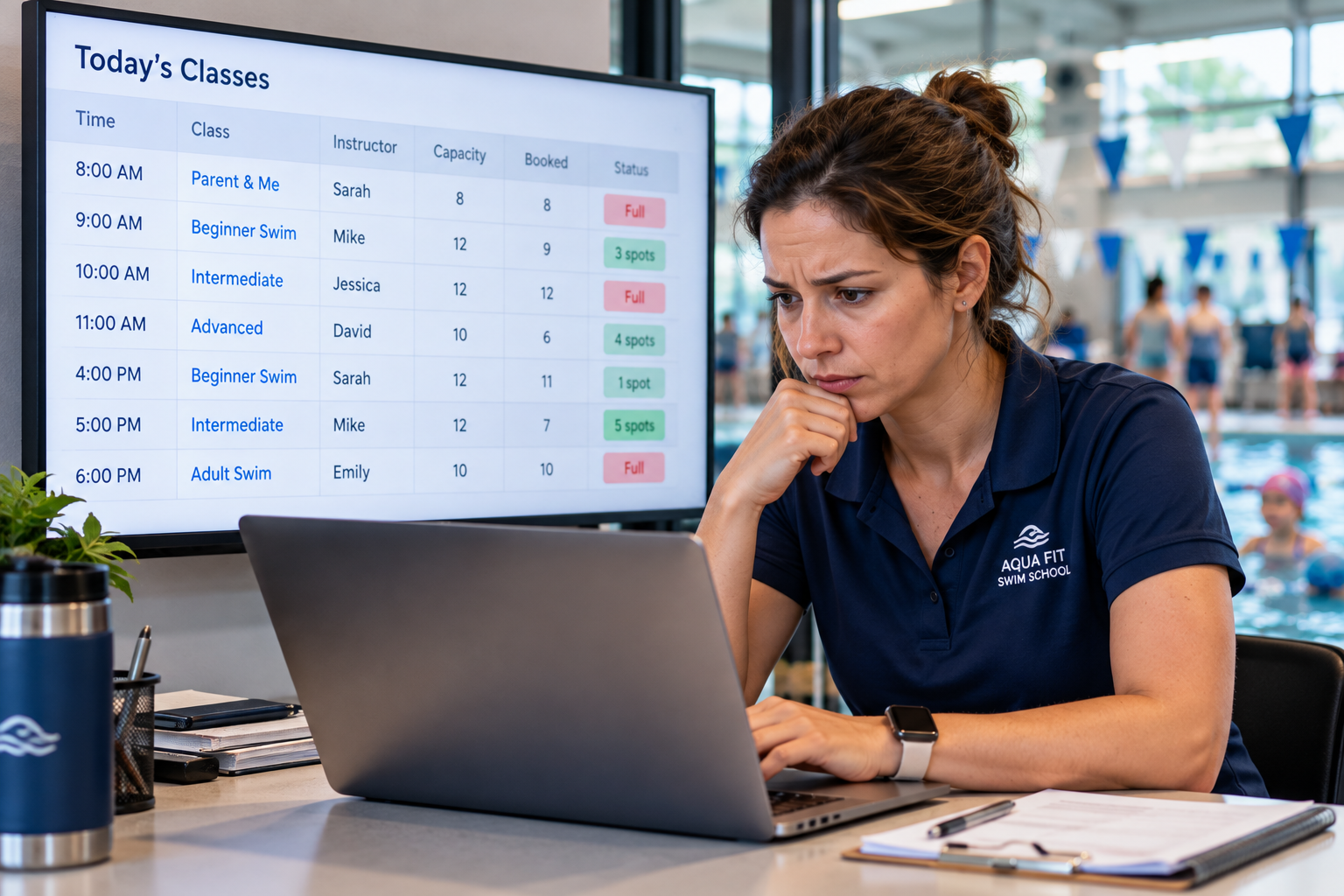
For most activity businesses, managing class capacity is a constant balancing act. Overbooking often leads to a poor experience and overcrowding, and underbooking has a risk of revenue loss. Without data, decisions are guesswork.
The complexity grows even further because attendance behavior is rarely consistent across all sessions.
For example:
- Beginner swim classes may have different no-show rates than advanced programs
- Weekend sessions may fill differently from weekday classes
- Some instructors naturally attract higher attendance and retention
- Seasonal demand shifts throughout the year
- Weather, holidays, and school schedules can all affect turnout
A modern booking and capacity management software with analytics dashboards helps operators identify which classes consistently underperform, which sessions can safely accommodate more bookings, and where demand is strongest.
4. Family & Group Booking Complexities

In kids’ activity businesses, bookings rarely happen one-to-one. Behind every reservation is often an entire family dynamic, parents managing schedules for multiple children, siblings enrolled in different classes, and shared memberships or credits being used across programs.
What seems like a straightforward booking process quickly becomes operationally complex behind the scenes.
For operators, this affects several areas at the same time:
- Capacity tracking across multiple simultaneous bookings
- Attendance validation for different children under one account
- Shared membership and credit management
- Billing accuracy and discount application
- Family-level communication and notifications
This ensures capacity reflects actual participants, not just bookings.
5. Attendance Tracking Isn’t Just Check-ins
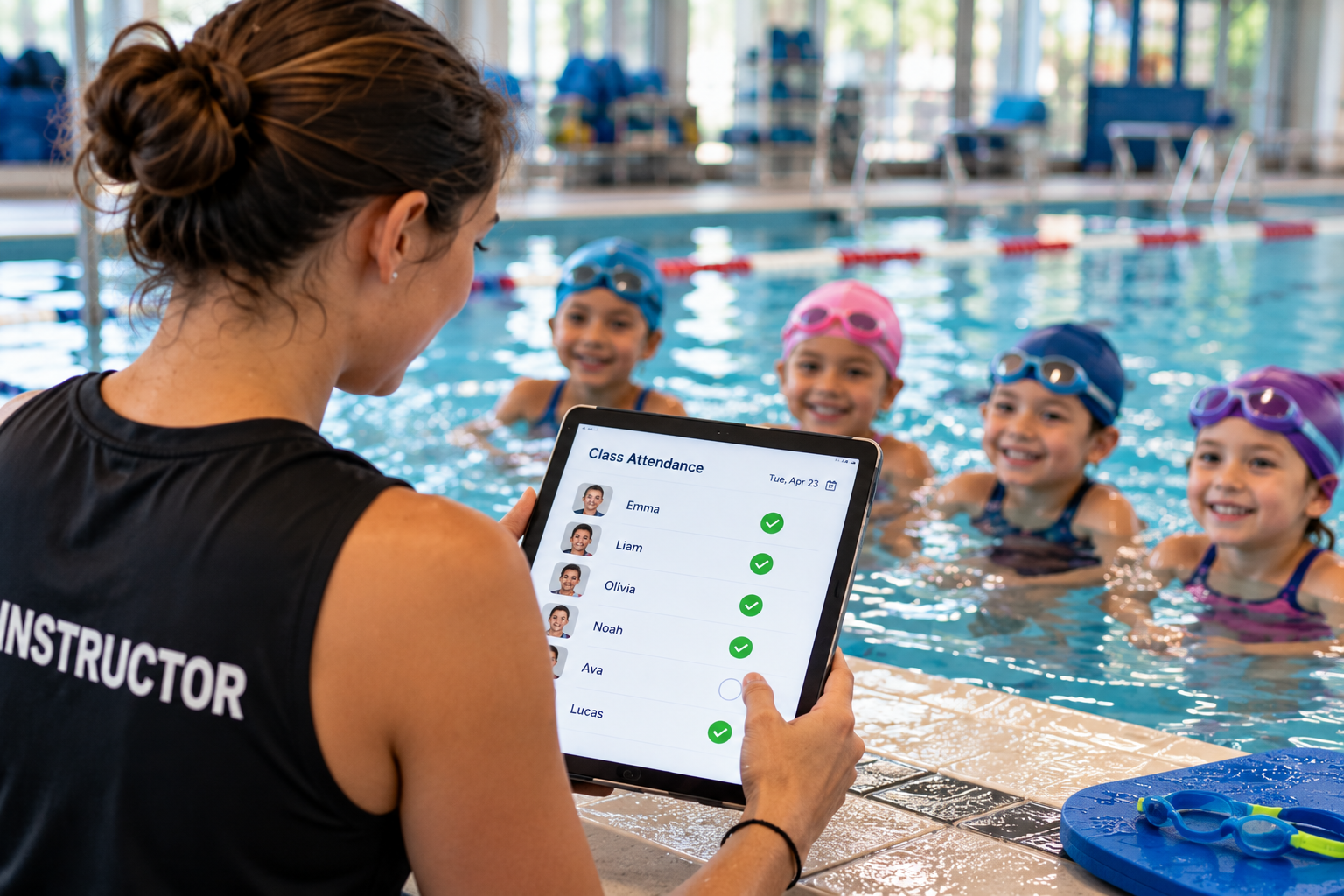
Many businesses think attendance tracking simply means marking who showed up. But in reality, attendance data affects far more than daily check-ins. It influences instructor payroll, performance analytics, customer retention insights, and compliance (especially for kids’ programs).
For kids’ activity businesses, especially, accurate attendance records are critical. Parents expect visibility, instructors need reliable class rosters, and operators depend on attendance data to understand which programs are thriving and which may need attention.
The challenge is that consistent attendance tracking is surprisingly difficult to manage manually. Tracking late arrivals or early exits complicates records, and staff may forget or delay updates.
Solutions like Omnify integrate booking, check-in, and reporting, eliminating fragmented tracking across tools.
6. Scheduling Conflicts Across Classes, Staff, and Locations
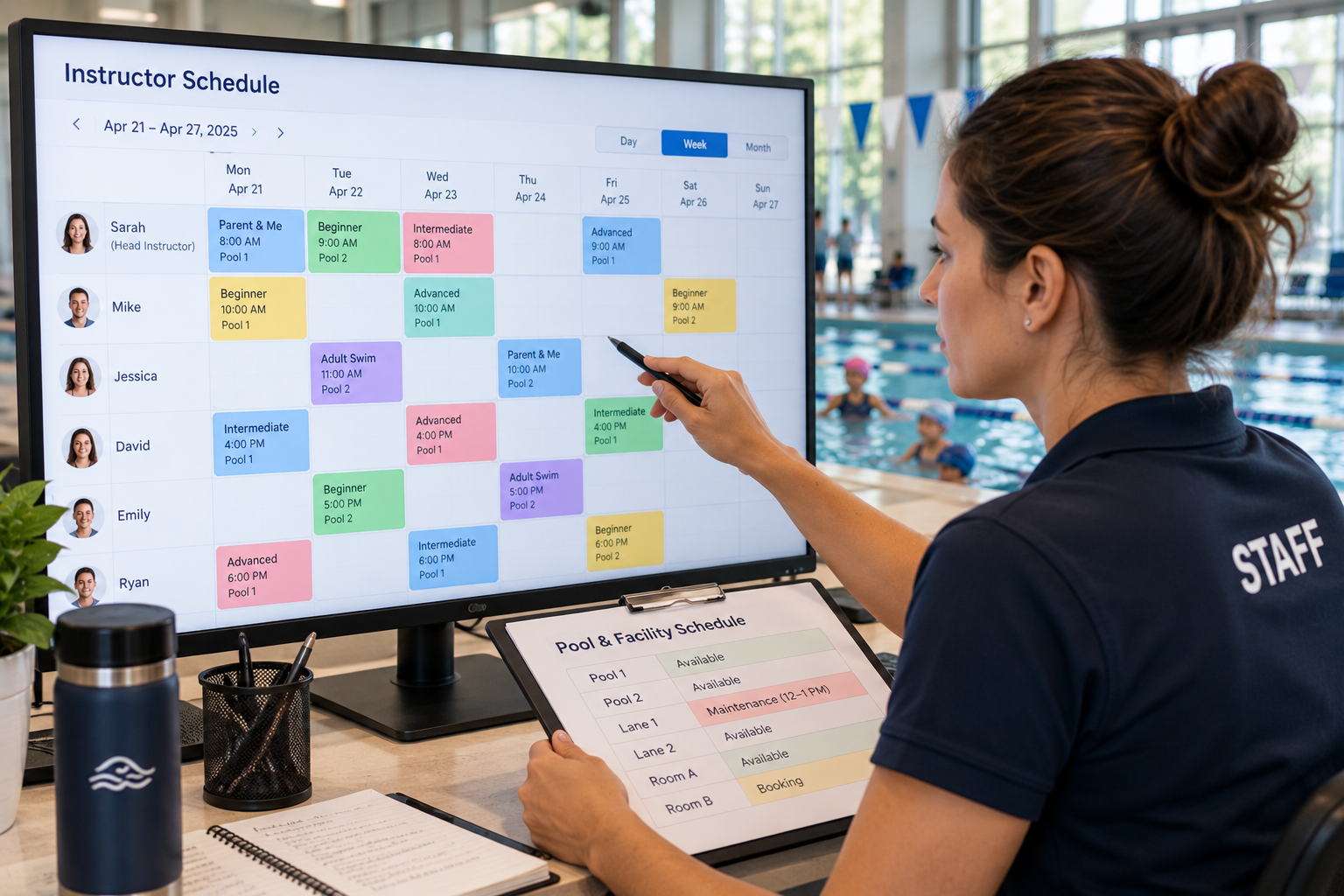
Scheduling may seem manageable in the early stages of a business, but as operations grow, it quickly becomes far more complex than simply assigning classes to time slots.
Most growing activity businesses eventually find themselves managing:
- Multiple locations and facilities
- Shared instructors across programs
- Overlapping classes and peak-hour demand
- Different room, pool, or equipment capacities
- Instructor availability, substitutions, and time-off requests
When schedules live in silos, teams lose real-time visibility into what’s happening across locations, instructors, and sessions. Small updates made in one system often fail to sync across other systems, increasing the risk of errors and miscommunication.
As businesses scale, this manual coordination becomes harder to sustain.
That’s why many modern activity businesses are adopting centralized scheduling systems that bring classes, staff availability, facility capacity, and bookings into a single platform. With real-time updates, automated conflict detection, and unified scheduling visibility, operators can reduce errors, improve coordination, and create a more reliable experience for both staff and customers.
7. Easy Makeup Re-Scheduling for Managing Attendance
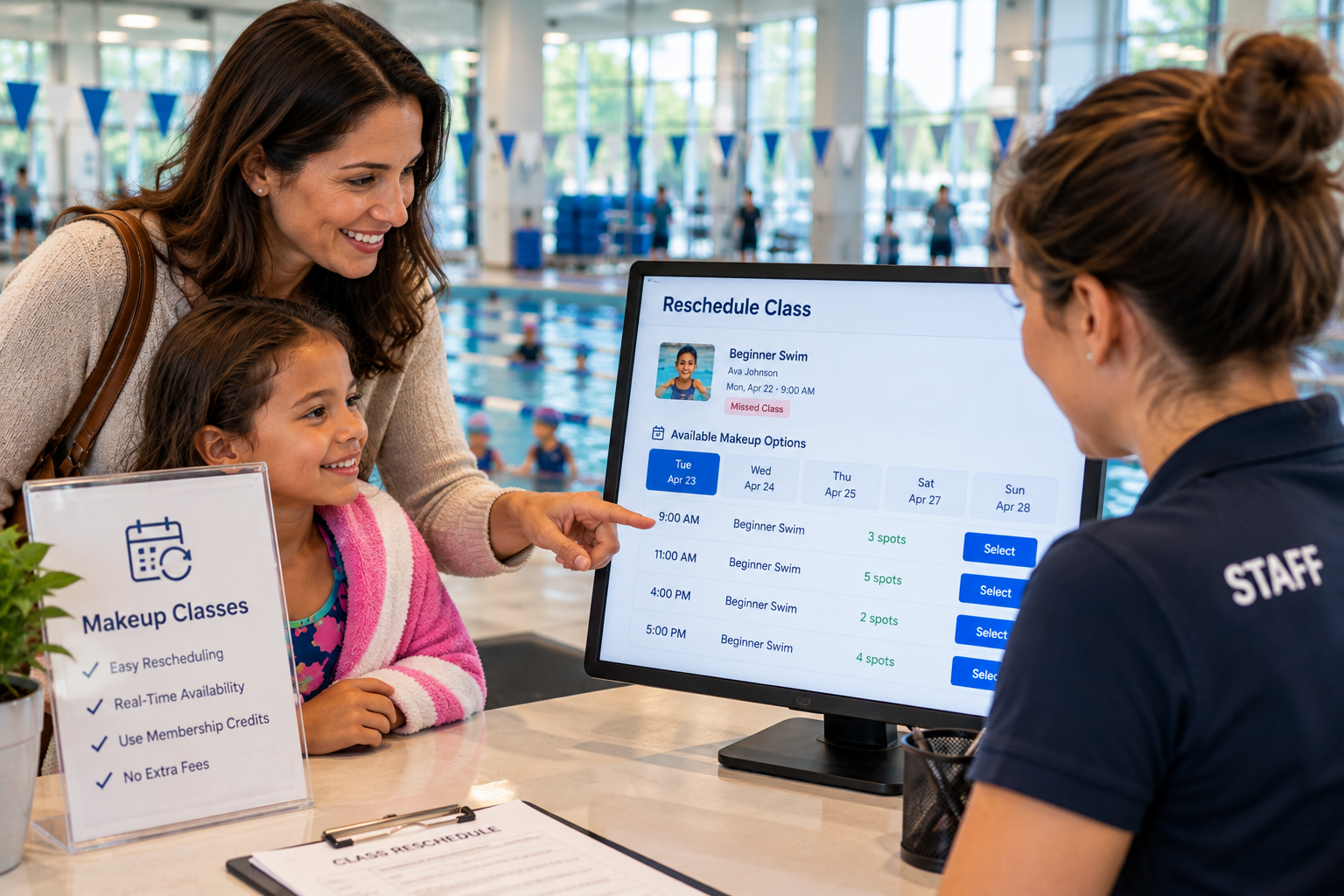
Managing attendance and class capacity sounds simple on the surface until a business starts scaling.
As activity businesses grow, operators often find themselves dealing with recurring scheduling conflicts, missed classes, waitlists, no-shows, and constantly changing availability across programs.
And one of the biggest challenges hidden inside all of this is makeup scheduling.
- A child misses a class because of illness.
- A session gets canceled due to the weather.
- A parent wants to reschedule into another available slot.
Now the business has to quickly figure out which classes currently have space available or which makeup credits are still valid. Or, can another student be added without affecting class quality or safety?
When these processes are handled manually, things become difficult very quickly.
That’s why many modern booking and management platforms now treat attendance, capacity management, and makeup scheduling as connected workflows rather than separate tasks.
The result is a smoother customer experience, better class utilization, reduced admin overhead, and fewer missed opportunities for long-term retention.
Final Thoughts
Attendance and capacity management may seem like a behind-the-scenes operational task, but in reality, it directly shapes customer experience, retention, and revenue growth.
Every empty slot, missed waitlist opportunity, scheduling conflict, or unclaimed makeup session quietly impacts both business performance and customer satisfaction. And the hardest part is that many of these issues often go unnoticed until they begin compounding over time.
As businesses grow, managing all of this manually becomes increasingly difficult. By bringing scheduling, attendance, waitlists, capacity management, and makeup classes into one connected system, businesses can reduce operational friction, automate repetitive workflows, and make faster, more informed decisions in real time.
At Omnify, we help swim schools, activity centers, and class-based businesses simplify operations, automate scheduling and attendance workflows, and create flexible booking experiences that scale alongside their growth.
Learn the biggest attendance and capacity challenges class-based businesses face, like no-shows, waitlists, etc., and how Omnify helps streamline operations.